-
-
Outdoor lighting has come a long way from the days of simple porch lights and floodlights controlled by a wall switch. Today, homeowners can automate nearly every aspect of their outdoor lighting, from scheduling pathway lights to turn on at sunset to adjusting landscape lighting colors with a smartphone.
Known as smart outdoor lighting, these systems have become increasingly popular as smart home technology continues to evolve. But with more features often comes a higher price tag, leaving many homeowners wondering whether smart lighting is truly worth the investment.
The answer depends on how you use your outdoor space, your long-term goals, and the level of convenience you’re looking for. Here’s what you should know before deciding if smart outdoor lighting is right for your home.
What Is Smart Outdoor Lighting?
Smart outdoor lighting refers to exterior lighting fixtures or lighting systems that can be controlled digitally rather than relying solely on traditional switches.
Depending on the system, homeowners can control lights through:
- Smartphone apps
- Voice assistants like Amazon Alexa or Google Assistant
- Wireless remotes
- Motion sensors
- Timers
- Sunset and sunrise scheduling
- Smart home automation platforms
Many systems also allow users to create multiple lighting “scenes” that automatically adjust brightness levels for different occasions.
For example, one setting might illuminate pathways and landscape features for everyday use, while another creates a softer atmosphere for entertaining guests on the patio.
The Benefits of Smart Outdoor Lighting
One of the biggest advantages of smart lighting is convenience.
Instead of walking outside to flip switches or remembering to turn lights on every evening, homeowners can automate the entire process.
Lights can be programmed to:
- Turn on automatically at sunset
- Turn off at sunrise
- Activate when motion is detected
- Adjust brightness throughout the evening
- Operate while you’re away from home
This automation not only makes everyday life easier but also helps improve home security by giving the appearance that someone is home even when the house is unoccupied.
Better Outdoor Ambiance
Outdoor lighting isn’t just about visibility—it’s about creating an atmosphere.
Smart lighting allows homeowners to easily adjust brightness depending on how the space is being used.
Hosting a family barbecue?
Increase brightness around the grill and dining area.
Relaxing around the fire pit?
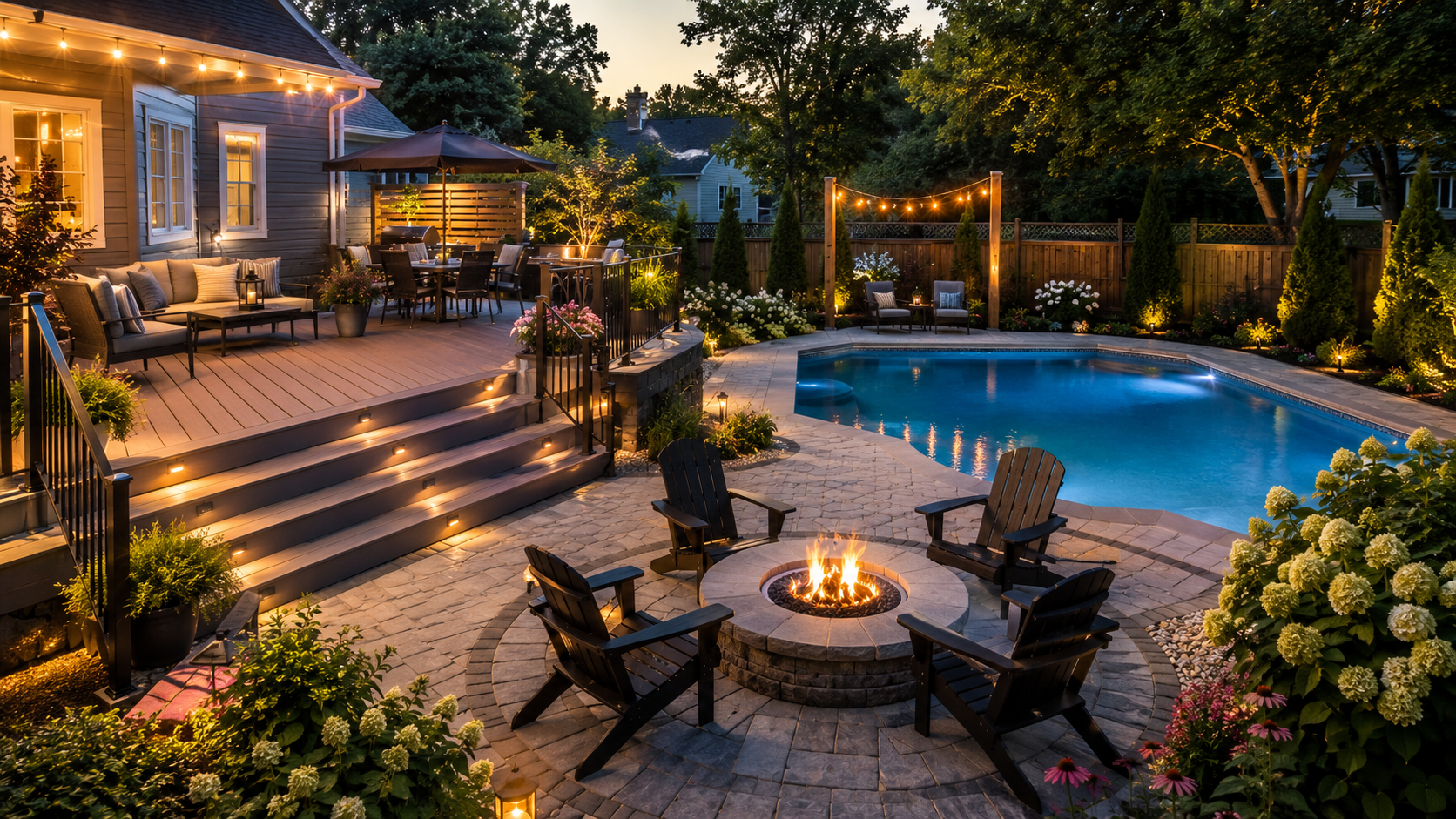
Dim the landscape lighting while leaving pathways illuminated.
Watching a movie outdoors?
Reduce ambient lighting to improve the viewing experience.
Rather than relying on one fixed lighting level, smart controls allow the backyard to adapt throughout the evening.
Improved Energy Efficiency
Most modern smart outdoor lighting systems use LED fixtures, which consume significantly less electricity than traditional incandescent bulbs while lasting much longer.
When combined with timers, occupancy sensors, and scheduling features, smart lighting can further reduce unnecessary energy use.
Instead of leaving lights on all night, homeowners can create schedules that provide illumination only when needed.
For example, pathway lighting might remain on until midnight before automatically shutting off, while security lighting activates only when motion is detected.
These small adjustments can help reduce electricity consumption over time without sacrificing comfort or safety.
Enhanced Home Security
Outdoor lighting has long been recognized as an important part of residential security.
Smart lighting takes this a step further by allowing homeowners to control exterior lights remotely from virtually anywhere.
Forgot to leave the lights on before leaving for vacation?
Simply open the app and activate them.
Many systems also integrate with motion sensors, video doorbells, and security cameras to automatically illuminate driveways, entryways, or side yards when activity is detected.
This added visibility can make navigating your property easier while enhancing overall peace of mind.
What Are the Downsides?
While smart outdoor lighting offers many advantages, it isn’t the right solution for every homeowner.
The most obvious consideration is cost.
Smart fixtures, controllers, transformers, and automation hubs generally cost more than traditional outdoor lighting components.
Some systems may also require professional installation, particularly when integrating with existing electrical systems or whole-home automation platforms.
Another factor is complexity.
Although many manufacturers have simplified setup considerably, homeowners who prefer straightforward, manual controls may find advanced features unnecessary.
Finally, smart systems often depend on Wi-Fi or other wireless communication. While modern systems are generally reliable, internet outages or connectivity issues can occasionally affect remote control features.
Smart Lighting Design Ideas
One of the greatest strengths of smart lighting is its flexibility.
Rather than treating your entire backyard as one lighting zone, consider dividing it into multiple areas.
Pathways
Automate pathway lights to turn on at sunset and turn off later in the evening.
Outdoor Living Room
Install dimmable lighting around seating areas to create different moods for entertaining, reading, or relaxing.
Decks and Stairs
Use motion-activated stair lights that illuminate only when someone approaches, improving safety while conserving energy.
Landscape Features
Highlight mature trees, gardens, water features, or stonework with independently controlled accent lighting that can be adjusted throughout the seasons.
Outdoor Kitchens
Task lighting above cooking and preparation areas can remain brighter while nearby seating areas stay softly illuminated.
By separating your lighting into zones, you create a backyard that’s both functional and visually dynamic.
Is Smart Outdoor Lighting Expensive?
The cost of smart lighting varies significantly depending on the size of your property and the level of automation you choose.
Budget-Friendly ($150–$500)
Homeowners can begin with smart bulbs, Wi-Fi-enabled plugs, or a few app-controlled fixtures for patios, porches, or small landscape areas.
Mid-Range ($500–$2,000)
This budget often includes professionally installed low-voltage LED systems with smart transformers, multiple lighting zones, timers, and smartphone control.
Premium Systems ($2,000+)
Larger outdoor living spaces may incorporate integrated smart lighting throughout the entire property, including landscape lighting, deck lighting, outdoor kitchens, under-deck ceilings, and architectural accent lighting—all synchronized with whole-home automation.
While premium systems require a larger investment, they also provide the highest level of convenience, customization, and long-term flexibility.
Is Smart Outdoor Lighting Worth It?
For many homeowners, the answer is yes.
If you regularly entertain outdoors, enjoy spending evenings on the patio, or already use smart home technology indoors, smart outdoor lighting can significantly improve both convenience and the overall outdoor experience.
The ability to automate schedules, control lighting remotely, create multiple scenes, and improve energy efficiency makes these systems far more versatile than traditional lighting alone.
However, not every backyard requires a fully automated system.
If your outdoor lighting needs are relatively simple, a traditional low-voltage LED system with a basic timer may provide everything you need at a lower cost.
Final Thoughts
Smart outdoor lighting isn’t about adding technology for technology’s sake.
It’s about making your outdoor spaces easier to enjoy.
Whether you’re automatically welcoming guests with illuminated pathways, setting the perfect mood for dinner on the patio, or enhancing your home’s security while traveling, smart lighting offers flexibility that traditional systems simply can’t match.
The best outdoor lighting plans combine thoughtful design with practical functionality. If automation fits the way you use your backyard, smart lighting can become one of the most valuable upgrades you make.
If simplicity is your priority, a conventional LED lighting system remains an excellent choice.
Ultimately, the smartest lighting solution is the one that complements your lifestyle and helps you spend more time enjoying your outdoor living space.
Sources
- U.S. Department of Energy. LED Lighting. https://www.energy.gov/energysaver/led-lighting
- American Lighting Association. Residential Lighting Design Resources. https://americanlightingassoc.com
- International DarkSky Association. Five Principles for Responsible Outdoor Lighting. https://darksky.org
- Consumer Technology Association (CTA). Smart Home Technology Resources. https://www.cta.tech
- ENERGY STAR®. Energy-Efficient Lighting. https://www.energystar.gov
-
Outdoor Heaters 101: A Beginner’s Guide to Choosing the Right Heating Solution for Your Outdoor Space
This beginner’s guide breaks down the most common outdoor heating options, including propane, electric infrared, and natural gas heaters. Learn how each type works, where it performs best, and what to consider when planning for your patio, deck, or outdoor living space.