-
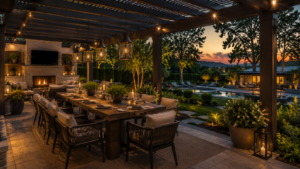
A great outdoor space shouldn’t become unusable the moment temperatures begin to drop. Whether you’re enjoying dinner on a covered patio, watching a game outside, or relaxing with friends on a cool fall evening, an outdoor heater can help extend the amount of time you spend outside.
But choosing the right heater involves more than finding the model with the highest heat output. Fuel type, patio size, coverage area, mounting location, wind exposure, electrical availability, and design all affect which heater will work best.
If you’re shopping for an outdoor heater, here’s what to consider before making your decision.
Start With Your Outdoor Space
Before comparing individual heaters, evaluate where the heat is actually needed.
Is your patio completely open or covered? Are you heating a small dining table or an entire outdoor living room? Is the area protected from wind? Do you have overhead beams or walls where a heater could be mounted?
These factors can dramatically affect heating performance.
For example, a freestanding propane heater may work well on an open patio because it can be repositioned as needed. A covered outdoor living room may be better suited for permanently mounted electric infrared heaters positioned over seating or dining areas.
For fixed electric systems, manufacturers commonly use the dimensions of the area, mounting height, available electrical power, and desired coverage to determine heater size and quantity.
Understand the Main Types of Outdoor Heaters
There are several options available to homeowners, but most residential patio heaters fall into a few categories.
Propane Patio Heaters
Freestanding propane heaters are among the most recognizable options. They use replaceable propane cylinders and don’t require permanent electrical installation.
Their biggest advantage is flexibility. You can move the heater around the patio as furniture arrangements or entertaining needs change.
They’re particularly attractive for:
- Open patios
- Occasional entertaining
- Spaces without convenient electrical access
- Homeowners who want portable heat
The tradeoff is having to refill or exchange propane tanks and find room for the heater itself.
Electric Infrared Heaters
Electric heaters are increasingly common in more permanent outdoor living spaces.
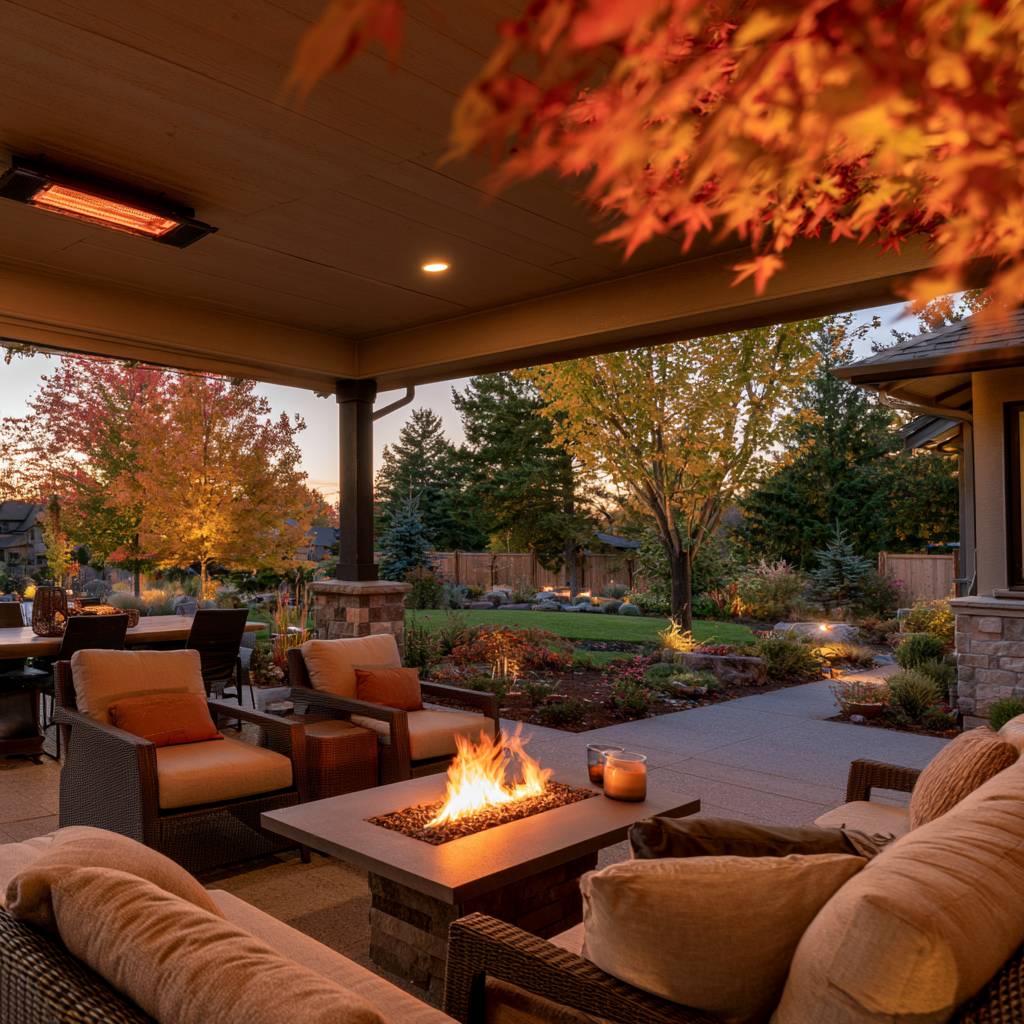
Many use radiant or infrared heating, directing energy toward people and surfaces within their coverage area. Models can be mounted to walls, ceilings, beams, or—in some systems—recessed into a ceiling.
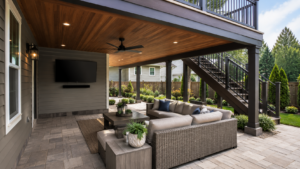
This makes electric heaters especially attractive for covered patios, pergolas, outdoor kitchens, and finished under-deck spaces where homeowners want the heating system to blend into the architecture.
Some manufacturers offer heaters from roughly 1,500 to 6,000 watts with different recommended mounting heights and coverage areas, demonstrating why matching the heater to the space is more important than simply purchasing the largest unit available.
Natural Gas Heaters
Natural gas provides another option for homeowners looking for permanent outdoor heating.
Rather than swapping propane cylinders, these heaters connect to a home’s gas supply. That can make them convenient for frequently used outdoor spaces, but installation is considerably more involved and should be handled by qualified professionals in accordance with applicable codes and manufacturer requirements.
Think About Placement Before You Buy
This is one of the most important steps.
Don’t buy the heater first and figure out where to put it later.
Instead, identify where people will actually spend their time. Heating the entire backyard isn’t necessary—you want to create comfortable zones around seating, dining, cooking, or entertainment areas.
For example, ceiling-mounted electric heaters can direct warmth downward over a dining or seating area, while wall-mounted units can project heat outward into an outdoor room.
On a larger patio, two strategically positioned heaters may create a better experience than one oversized heater located far away from everyone.
Consider the Design of Your Space
Outdoor heaters don’t have to look like an afterthought.
For a traditional open patio, freestanding heaters can be positioned around conversation areas and moved when necessary.
For a modern covered patio, slim wall- or ceiling-mounted electric heaters can blend into structural beams and darker finishes.
For higher-end outdoor rooms, certain electric systems can even be flush-mounted into compatible ceilings, creating a much cleaner architectural appearance.
Think about how the heater will interact with your other outdoor features as well. Lighting, ceiling fans, speakers, televisions, curtains, and heaters may all compete for ceiling and wall space.
Planning these features together creates a much more intentional finished design.
Pay Attention to Power Requirements
If you’re considering electric heat, check your available electrical capacity before choosing a heater.
Larger electric patio heaters can require substantial power. For example, a 6,000-watt, 240-volt heater can draw 25 amps. Heater manufacturers therefore recommend evaluating available electrical capacity early in the design process.
If you’re building a new covered patio, outdoor kitchen, or finished under-deck area, this is worth discussing with your electrician before the ceiling and finishes are installed.
Planning ahead can make adding integrated heaters significantly easier.
Don’t Ignore Safety and Clearances
Outdoor heaters produce significant heat, so proper placement matters.
The National Fire Protection Association recommends keeping combustible materials at least three feet from heating equipment as a general safety principle. Propane heaters also need adequate ventilation and must be used according to their listing and manufacturer’s instructions.
Exact clearance requirements vary by heater. One electric manufacturer’s guidance, for example, specifies minimum distances around and in front of certain models.
That’s why homeowners shouldn’t assume a heater is safe beneath a particular pergola or covered patio simply because it physically fits.
Always follow the clearance and installation requirements for the exact model you’re purchasing.
Look for Useful Controls
Controls can make a permanent heating system much more enjoyable.
Depending on the heater, options can include:
- Basic on/off controls
- Multiple heating levels
- Timers
- Heating zones
- Dimmers or regulators
- Smart-home integration
If you have a large outdoor living area, zoning can be particularly useful. You might heat the dining area during dinner without running heaters above an unused lounge area.
This allows your outdoor space to adapt to how you’re actually using it.
The Outleven Outdoor Heater Buying Checklist
Before purchasing a heater, ask yourself:
- How large is the area I actually want to heat?
- Is the space open or covered?
- How exposed is it to wind?
- Do I want propane, electric, or natural gas?
- Do I want portable or permanent heating?
- Where will the heater be positioned?
- Do I have sufficient electrical or gas infrastructure?
- What clearances does the manufacturer require?
- Will the heater interfere with fans, lighting, curtains, or other features?
- Do I want multiple heating zones or smart controls?
Choosing the Right Outdoor Heater
There isn’t one outdoor heater that’s best for every backyard.
For an open patio where flexibility matters, a portable propane heater may be exactly what you need. For a finished outdoor living room, integrated electric heaters may provide a cleaner appearance and more targeted comfort. Larger permanent spaces may benefit from multiple heaters designed around specific seating zones.
Start with your space—not the product.
Think about where people gather, how often you’ll use the area, what infrastructure is available, and how you want the finished space to look. From there, you can choose a heater that becomes part of your outdoor living design rather than something you simply roll onto the patio when it gets cold.
The right heating system won’t make winter disappear, but it can make those cool spring mornings and crisp fall evenings a lot more enjoyable.
Sources
Outdoor Heaters 101: A Beginner’s Guide to Choosing the Right Heating Solution for Your Outdoor Space
This beginner’s guide breaks down the most common outdoor heating options, including propane, electric infrared, and natural gas heaters. Learn how each type works, where it performs best, and what to consider when planning for your patio, deck, or outdoor living space.