Improve Comfort
Air movement helps perspiration evaporate more efficiently, which can make warm outdoor conditions feel more comfortable.

Learn how to make patios, porches, decks, pergolas, and covered outdoor living spaces more comfortable with outdoor ceiling fans, portable fans, airflow planning, shade, and other cooling strategies.
Outdoor cooling is the process of making patios and other exterior living spaces feel more comfortable during warm weather. Outdoor ceiling fans are one of the most common solutions because moving air across the skin can improve perceived comfort without trying to air-condition an open space. The best cooling strategy depends on the size of the area, ceiling height, exposure to sun, humidity, available mounting locations, and whether the space is fully covered, partially covered, or completely open.
Outdoor fans do not lower the air temperature the way an air conditioner does. Instead, they move air through the occupied area, helping people feel cooler while also improving circulation in covered spaces.
Air movement helps perspiration evaporate more efficiently, which can make warm outdoor conditions feel more comfortable.
Fans can reduce stagnant pockets of air beneath covered patios, porches, pergolas, and elevated decks.
Better airflow can make dining, entertaining, and relaxing outside more enjoyable during warmer parts of the year.
Fans work best alongside shade, thoughtful orientation, weather protection, and other heat-management strategies.
Fan size, airflow, mounting height, weather exposure, placement, and controls all affect how well an outdoor cooling setup performs.

Bring a comfortable breeze to your gazebo or pergola with a thoughtfully planned outdoor fan. Learn how to evaluate weather ratings, mounting support, blade clearance, placement, and power before choosing a fan for your space.

An outdoor wall fan can bring a comfortable breeze to your patio or porch without taking up floor space. Learn how to compare weather ratings, airflow, noise, mounting options, and controls to choose a fan that fits your outdoor space.

Good outdoor airflow starts with proper planning. Learn how to position fans around seating areas, account for ceiling height and weather exposure, and coordinate fans with lighting, heaters, speakers, and other features to create a comfortable and well-designed outdoor space.
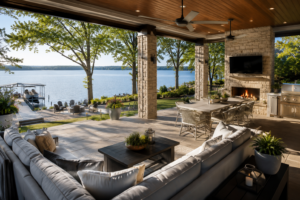
Transform your backyard into a comfortable extension of your home with practical outdoor living room ideas that blend style and functionality. This guide covers 10 essential tips for choosing furniture, lighting, shade, entertainment, and other features to create an outdoor space you’ll use for relaxing, entertaining, and everyday living.
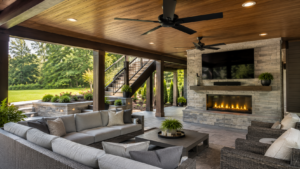
Outdoor ceiling fans face moisture, pollen, dust, temperature changes, and other conditions that indoor fans don’t. This guide covers simple cleaning, seasonal inspections, corrosion checks, and troubleshooting tips to help keep your outdoor fans looking good and operating smoothly.
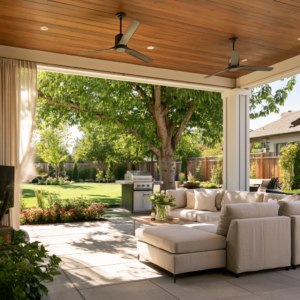
The right outdoor fan can make your patio, deck, or pergola significantly more comfortable during warm weather. This beginner’s guide explains the different types of outdoor fans, key features to consider, and how to choose the best cooling solution for your outdoor living space.
Ceiling fans are often the first choice for covered outdoor living areas, but wall-mounted and portable fans can solve airflow problems where overhead installation is not practical.
A strong option for patios, porches, pergolas, and covered decks with suitable overhead structure and electrical access.
Useful when ceiling mounting is difficult or when airflow needs to be directed toward a specific seating, cooking, or work area.
Portable floor or pedestal fans can add temporary airflow without permanent installation and can be repositioned as needs change.
Outdoor fan performance depends on more than blade diameter. The size and shape of the patio, ceiling height, mounting position, fan airflow, furniture layout, and number of fans all affect comfort.
A fan should move air through the occupied zone rather than simply filling an empty ceiling area. Large or elongated spaces may perform better with multiple fans instead of one oversized unit.
Explore outdoor fan sizing and placementOutdoor fans should be selected for the environment in which they will operate. A protected covered porch and an exposed pergola do not necessarily require the same type of fan.
Damp-rated fans are generally intended for covered locations where moisture and humidity are present but direct rain or water exposure is limited.
Wet-rated fans are designed for locations where the fan may encounter more direct moisture or weather exposure. Follow the manufacturer's installation limitations.
Ceiling fans should mount to appropriately rated structural support and electrical hardware designed for fan loads.
Coordinate fan locations with recessed lights, heaters, speakers, beams, curtains, and other ceiling or wall-mounted components before installation.
Fans are only one part of outdoor comfort. Direct solar exposure can have a major effect on how hot a patio feels. Roofs, pergolas, shade structures, curtains, landscaping, and thoughtful orientation can reduce solar gain before airflow is added.
In covered spaces, the goal is usually to combine shade with enough airflow to prevent the area from feeling stagnant. In open spaces, portable airflow and strategic shade may be more practical than permanent overhead fans.
Explore outdoor curtains and sun controlStart with the size, shape, ceiling height, exposure, and seating layout of your outdoor space. Then choose fan size, placement, controls, and weather rating around those conditions.