When most homeowners think about improving their backyard, they often picture new landscaping, a larger patio, or comfortable outdoor furniture. One of the most impactful upgrades, however, is often overlooked—outdoor lighting.
A thoughtfully designed outdoor lighting system does much more than make your backyard visible after dark. It enhances safety, improves security, extends the amount of time you can enjoy your outdoor spaces, and highlights the architectural and landscaping features that make your home unique. Whether you’re hosting friends on the patio, relaxing on your deck after sunset, or simply pulling into your driveway at night, the right lighting creates both functionality and atmosphere.
If you’re just beginning to explore outdoor lighting, understanding the different types of fixtures, lighting techniques, and design principles will help you make informed decisions and avoid common mistakes.
Why Outdoor Lighting Matters
Outdoor lighting serves three primary purposes: safety, security, and aesthetics.
Safety is often the first priority. Properly illuminated walkways, stairs, driveways, and entrances help reduce the risk of trips and falls after dark. Deck stairs, uneven pathways, and changes in elevation can become difficult to see without adequate lighting, especially during the winter months when daylight hours are shorter.
Lighting also contributes to home security. A well-lit exterior can improve visibility around entry points, garages, and side yards, making it easier for homeowners and visitors to navigate while also discouraging unwanted activity. Motion-activated fixtures can provide additional visibility when movement is detected, while permanently illuminated pathways create a welcoming environment without excessive brightness.
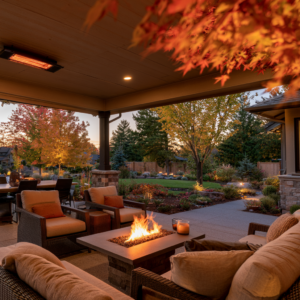
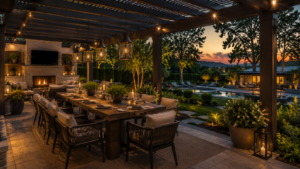
Finally, outdoor lighting dramatically enhances curb appeal and outdoor living spaces. The right combination of lighting transforms an ordinary backyard into an inviting extension of the home, making it feel larger, warmer, and more enjoyable well into the evening.
The Different Types of Outdoor Lighting
Understanding the four primary categories of outdoor lighting makes planning much easier.
Ambient Lighting
Ambient lighting provides general illumination for an outdoor area. Think of it as the foundation of your lighting plan.
Examples include:
- Ceiling fixtures on covered patios
- Pendant lights
- Outdoor chandeliers
- Recessed soffit lighting
- Wall-mounted lanterns
Ambient lighting allows people to comfortably move throughout a space without relying on harsh, concentrated light sources.
Task Lighting
Task lighting focuses light where specific activities take place.
Examples include:
- Grill lighting
- Outdoor kitchen lighting
- Stair lighting
- Reading lights
- Deck post cap lights
Rather than illuminating an entire backyard, task lighting ensures that important work areas remain functional after sunset.
Accent Lighting
Accent lighting draws attention to architectural features or landscape elements.
Common applications include:
- Uplighting trees
- Illuminating stone walls
- Highlighting water features
- Showcasing sculptures
- Lighting pergolas
Accent lighting adds depth and dimension by creating contrast between illuminated and shadowed areas.
Decorative Lighting
Decorative lighting emphasizes style as much as function.
Popular decorative fixtures include:
- String lights
- Lanterns
- Fire features
- Decorative sconces
- Hanging Edison bulbs
These fixtures help establish the mood and personality of an outdoor living space.
Popular Outdoor Lighting Fixtures
Modern outdoor lighting systems include a wide variety of fixture types, each serving a different purpose.
Path Lights are installed along sidewalks, garden paths, and walkways to improve visibility while defining the landscape.
Spotlights produce concentrated beams used to highlight trees, architectural details, or focal points.
Flood Lights create broad illumination over larger areas such as driveways, parking spaces, or backyards.
Deck Lights can be integrated into stairs, railings, or post caps to improve safety while adding subtle visual appeal.
Step Lights are recessed into stair risers or retaining walls, making elevation changes much easier to navigate after dark.
Wall Lights mounted near entryways and garages provide practical illumination while complementing the home’s architecture.
By combining multiple fixture types, homeowners create layered lighting that feels natural instead of overly bright.
LED vs. Solar Outdoor Lighting
One of the first decisions homeowners face is whether to install LED or solar-powered lighting.
LED lighting has become the industry standard because it offers exceptional energy efficiency, long operating life, and consistent brightness. Modern LED fixtures consume significantly less electricity than traditional incandescent bulbs while lasting tens of thousands of hours under normal use.
Solar lighting offers an easy installation option because it requires no electrical wiring. Small solar panels collect energy during the day and power the lights after sunset. While solar fixtures work well for decorative applications or simple pathways, their brightness and runtime depend heavily on weather conditions, seasonal daylight hours, and battery quality.
Many homeowners choose a combination of both systems, using professionally installed low-voltage LED lighting for primary illumination and solar fixtures for supplemental landscape accents.
Understanding Low-Voltage Lighting
Most residential outdoor lighting systems operate on low-voltage electricity.
Unlike standard household electrical circuits that carry 120 volts, low-voltage systems typically use a transformer to reduce power to 12 volts before it reaches the fixtures.
Low-voltage lighting offers several advantages:
- Lower energy consumption
- Simplified installation
- Greater flexibility when expanding the system
- Reduced operating costs
- Improved safety around outdoor environments
Because of these benefits, low-voltage LED systems have become the preferred choice for landscape lighting, patios, decks, and garden pathways.
Planning Your Outdoor Lighting Design
One of the biggest mistakes homeowners make is installing too many lights.
Effective outdoor lighting isn’t about making the backyard as bright as possible. Instead, it creates layers of light that guide the eye while preserving contrast and natural nighttime ambiance.
A good lighting plan begins by identifying how each area will be used.
Ask yourself:
- Where do people walk?
- Where do people gather?
- Which landscape features deserve attention?
- Are there dark corners that affect safety?
- Do you want subtle lighting or a dramatic appearance?
By answering these questions first, you can determine where ambient, task, accent, and decorative lighting should be placed.
Professional designers often recommend illuminating destinations rather than every square foot of the yard. Lighting a seating area, walkway, outdoor kitchen, and a few specimen trees usually creates a far more attractive result than flooding the entire backyard with light.
Common Outdoor Lighting Mistakes
Even simple lighting projects can become less effective if a few basic principles are overlooked.
Using fixtures that are too bright is perhaps the most common mistake. Excessive brightness creates glare, reduces nighttime visibility, and can actually make outdoor spaces feel less inviting.
Poor fixture placement can also diminish the overall effect. Lights aimed directly into seating areas or windows create discomfort, while improperly positioned spotlights may fail to highlight the intended landscape features.
Ignoring maintenance is another frequent issue. Dirt, pollen, leaves, and insects accumulate on fixtures throughout the year, reducing light output over time. Periodic cleaning and occasional bulb replacement help maintain consistent performance.
Finally, many homeowners install lighting without considering future outdoor upgrades. Planning ahead for additions such as outdoor kitchens, pergolas, entertainment systems, or landscape renovations can make expanding the lighting system much easier later.
Creating a Backyard You’ll Enjoy After Sunset
Outdoor lighting is one of the few home improvements that provides immediate benefits every evening. It improves safety, enhances curb appeal, increases the usability of patios and decks, and creates an atmosphere that encourages family and friends to spend more time outdoors.
Whether your goal is softly illuminating a garden path, highlighting mature trees, or creating a fully integrated outdoor living space, understanding the basics of outdoor lighting allows you to build a system that complements both your home and your lifestyle.
The best outdoor lighting designs are rarely the brightest. Instead, they use carefully placed layers of light to create warmth, comfort, and visual interest. By combining ambient, task, accent, and decorative lighting, homeowners can transform an ordinary backyard into an inviting outdoor retreat that remains beautiful long after the sun goes down.
Sources
- U.S. Department of Energy. LED Lighting. https://www.energy.gov/energysaver/led-lighting
- International Dark-Sky Association. Responsible Outdoor Lighting Principles. https://darksky.org
- American Lighting Association. Outdoor Lighting Guide. https://americanlightingassoc.com
- National Association of Home Builders. Outdoor Living Trends and Design. https://www.nahb.org