-
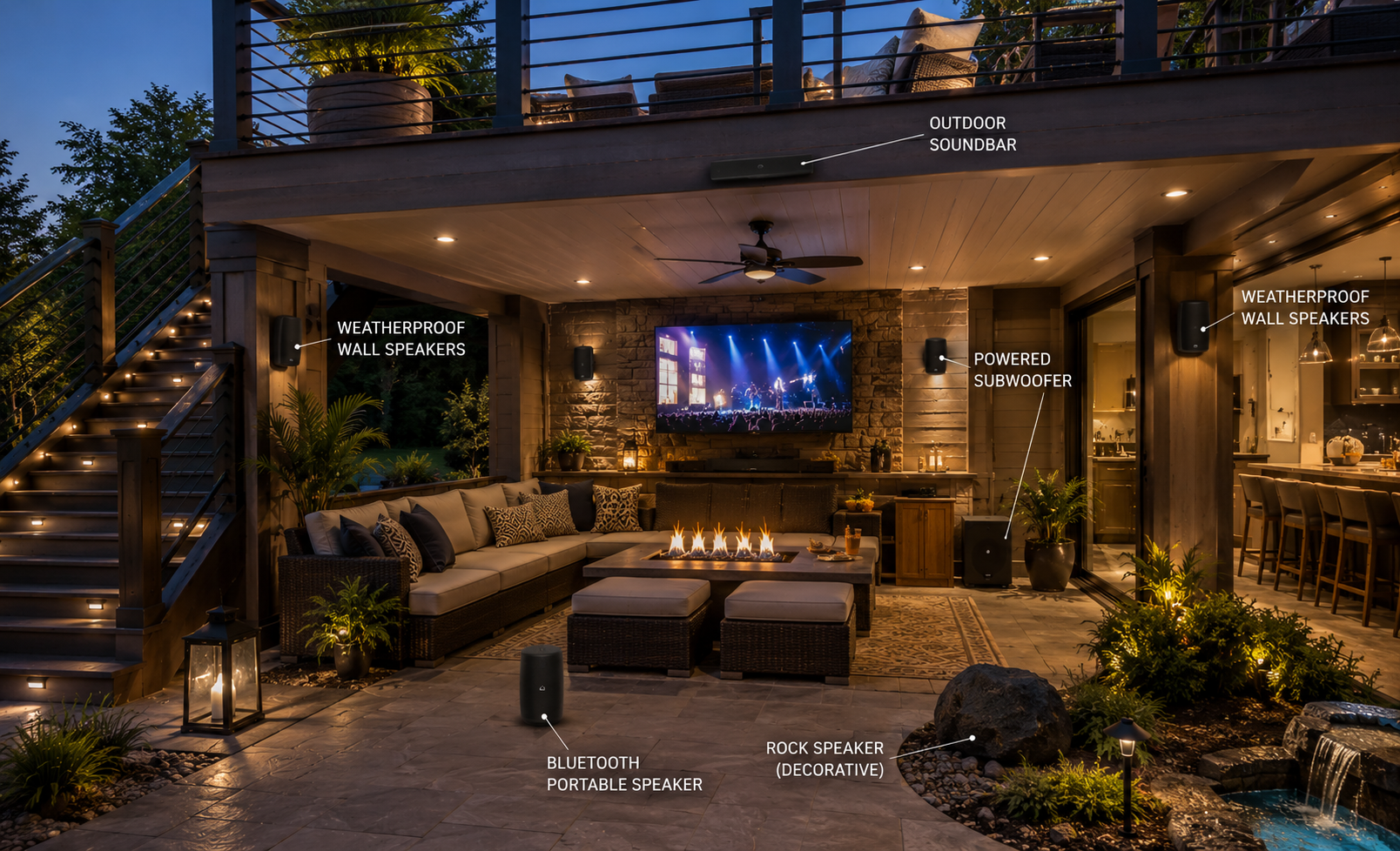
A quality outdoor sound system can transform a backyard into a true entertainment space. Whether you have a pair of speakers mounted beneath a covered patio, landscape speakers distributed throughout the yard, or a portable Bluetooth speaker by the pool, outdoor audio makes everything from quiet evenings to large gatherings more enjoyable.
Unlike indoor equipment, however, outdoor speakers face rain, humidity, pollen, dirt, temperature changes, insects, and sometimes salt or pool water. Outdoor-rated equipment is designed to handle these conditions, but a little routine maintenance can help keep your system looking and performing its best.
Here’s what homeowners should know.
- Know What Your Speakers Are Rated For
Before cleaning anything, understand how much exposure your equipment is actually designed to handle.
Many outdoor electronics use an IP (Ingress Protection) rating. The first number indicates protection against solid particles such as dust, while the second represents protection against water. Higher numbers generally indicate greater protection within each category.
For example, some permanently installed outdoor speakers carry an IP66 rating, while portable outdoor speakers may have different levels of water and dust resistance.
Don’t assume that “outdoor” automatically means waterproof. Check the specifications for your particular equipment before exposing it to rain, sprinklers, hoses, or other sources of moisture.
- Keep Speaker Grilles Clean
Outdoor speaker grilles naturally collect pollen, dust, dirt, cobwebs, and other debris.
Periodically inspect your speakers and gently remove visible buildup. Depending on the manufacturer’s instructions, a soft cloth with mild detergent and water may be appropriate.
For certain environmental speakers, Bose recommends using a cloth dampened with mild detergent and water. It specifically cautions against using enough water pressure to force moisture behind the grille and into the speaker components.
That’s an important rule for outdoor audio in general:
Don’t pressure-wash your speakers just because they’re weather-resistant.
High-pressure water can reach areas that ordinary rainfall may not.
- Inspect Wiring and Connections
For permanently installed systems, the speakers aren’t the only components exposed to the environment.
Speaker wire, terminals, connectors, junctions, and mounting hardware should also be inspected periodically.
Look for:
- Loose connections
- Exposed wire
- Corrosion
- Cracked or damaged cable
- Loose mounting brackets
- Connections exposed to standing water
- Landscape wires disturbed by gardening
Connections can be particularly vulnerable outdoors. Bose notes that bare speaker-wire ends can be affected by exposure to the elements, especially in saltwater environments, and recommends inspecting protected connections periodically.
Higher-end landscape audio systems may use weatherproof connectors and marine-grade wiring specifically to reduce these vulnerabilities.
If wiring is damaged or you’re unsure whether a connection is safe, have the system inspected by a qualified installer rather than improvising a repair.
- Check Landscape Speakers After Yard Work
Landscape speakers require a little different maintenance than wall-mounted patio speakers.
Because they’re positioned around gardens and planting beds, they can be affected by mulch, soil, leaves, lawn equipment, irrigation systems, and growing plants.
A few times each year, walk around your system and make sure landscaping hasn’t buried or obstructed the speakers.
Trim vegetation when necessary and remove accumulated leaves or debris. Also check that speakers haven’t shifted from their intended position.
Be careful during mowing, edging, aerating, and other landscaping projects, particularly if speaker cables run underground.
- Take Care of Portable Bluetooth Speakers
Portable speakers shouldn’t necessarily be treated the same as permanently installed outdoor speakers.
Some are designed to handle rain and splashes but aren’t intended to remain outdoors permanently. For example, Sonos recommends bringing certain portable models indoors after use even though they’re weather-resistant.
If a portable speaker gets wet, dry it according to the manufacturer’s instructions before charging.
After exposure to saltwater, chlorine, mud, or sand, additional cleaning may also be necessary. Bose recommends gently rinsing certain compatible waterproof models with fresh water after salt or chlorinated-water exposure and allowing the connector port to dry fully before charging.
That makes portable speaker maintenance especially important around pools and coastal properties.
- Don’t Forget the Amplifier and Electronics
Your outdoor speakers may be weather-resistant, but the equipment powering them might not be.
Amplifiers, receivers, charging docks, network equipment, and other electronics should only be installed in environments they’re specifically rated for.
For example, Sonos notes that the charging base used with certain portable outdoor speakers isn’t weather-resistant and should remain indoors.
For a permanent system, inspect the amplifier area periodically. Make sure ventilation openings remain clear and watch for excessive dust, moisture, overheating, or damaged cables.
Never assume that because the speakers are outdoor-rated, every component connected to them is as well.
- Listen for Changes in Sound
Your ears can be one of the best maintenance tools you have.
Every few months, play music through the entire system and walk around your outdoor space.
Listen for:
- Crackling
- Distortion
- Buzzing
- Reduced bass
- One speaker playing quieter than another
- Speakers cutting in and out
- Missing audio zones
If one speaker suddenly sounds different, investigate before simply increasing the volume.
The issue could be a loose connection, damaged wire, speaker problem, amplifier setting, or network issue.
Create a Simple Seasonal Routine
Outdoor sound maintenance doesn’t need to be complicated.
At the beginning and end of your primary outdoor season, clean the speakers, inspect wiring and mounts, remove landscaping debris, test every audio zone, and look for signs of moisture or corrosion.
Portable equipment should be stored appropriately when not in use, while permanent equipment should remain installed only in conditions it’s designed to withstand.
Most importantly, follow the care instructions for your particular system. Outdoor speakers vary considerably in their construction and weather resistance, so what works for one model may not be appropriate for another.
With a little routine attention, your outdoor audio system can stay ready for summer cookouts, game days, evenings around the fire, and everything else your backyard was designed for.
Sources

Outdoor Heaters 101: A Beginner’s Guide to Choosing the Right Heating Solution for Your Outdoor Space
This beginner’s guide breaks down the most common outdoor heating options, including propane, electric infrared, and natural gas heaters. Learn how each type works, where it performs best, and what to consider when planning for your patio, deck, or outdoor living space.