-
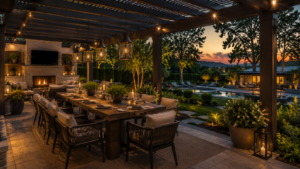
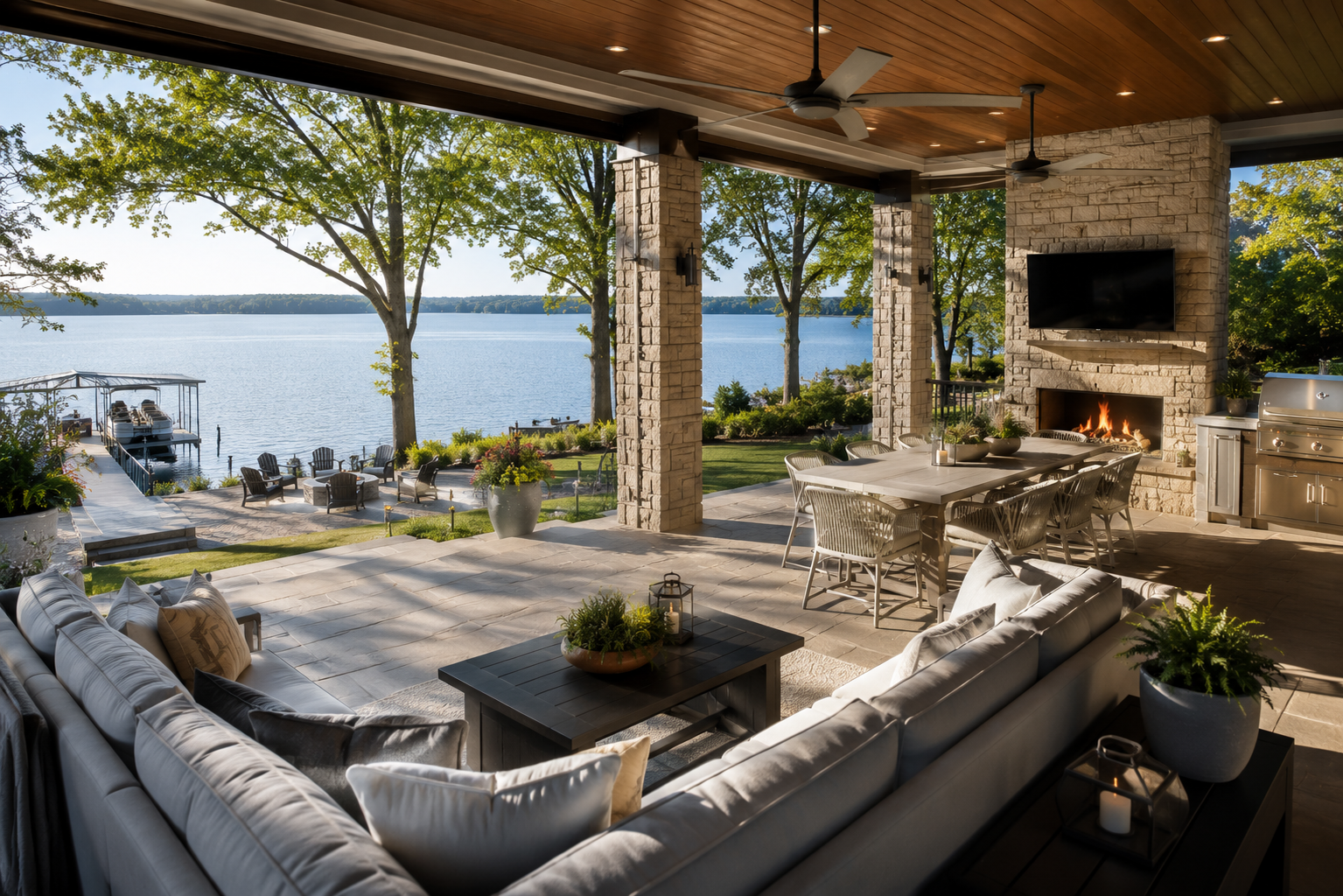
A great outdoor living room should feel like more than a patio with furniture.
The best spaces borrow many of the things we love about indoor living rooms—comfortable seating, lighting, entertainment, privacy, and temperature control—while embracing everything that makes being outdoors enjoyable. Fresh air, landscaping, open views, fire features, and natural materials can create an atmosphere that would be difficult to replicate inside your home.
And you don’t necessarily need an enormous backyard or luxury renovation budget to make it happen.
Whether you’re starting with an empty patio, an elevated deck, a pergola, or an unfinished space beneath your deck, thoughtful planning can transform it into an outdoor room your family actually wants to use.
Here are 10 ideas to help you get started.
- Start With How You Want to Use the Space
Before choosing furniture, lighting, or finishes, decide what you actually want to do outside.
A homeowner who regularly hosts 15 people needs a very different outdoor living room than someone who primarily wants a quiet place to read after work.
Consider your priorities. Will you watch sports outside? Host dinners? Relax around a fire? Let children use the space? Entertain large groups?
Once you’ve identified the primary purpose, divide your available space into activity zones.
For example, a large patio might include a main conversation area with sectional seating, a smaller dining area near the grill, and a separate fire pit farther into the yard.
Even small spaces benefit from zoning. An outdoor rug, furniture arrangement, lighting, or planters can visually define an area without requiring walls.
Outleven Tip: Design around what you’ll do outside most often—not what looks best in a showroom.
- Create a Comfortable Foundation
Think about your indoor living room. The flooring, walls, and ceiling establish the room before furniture ever enters it.
Outdoor rooms work similarly.
Pavers, natural stone, concrete, composite decking, porcelain tile, and traditional wood decking can all provide attractive foundations depending on your space and budget.
Then look overhead.
Pergolas, pavilions, awnings, covered patios, and elevated decks can provide shade and make an outdoor living room feel much more defined.
If you already have an elevated deck, don’t overlook the square footage underneath it. An under-deck drainage system can redirect rainwater and help turn an otherwise wet area into usable covered space.
Once dry, the area can support seating, lighting, fans, entertainment equipment, and other amenities, essentially creating another outdoor room without increasing your home’s footprint.
- Choose Furniture Like You Would Indoors
A common mistake is treating outdoor furniture as an afterthought.
If you want people to spend hours outside, give them somewhere comfortable to sit.
Sectionals work particularly well because they encourage conversation and can define the perimeter of a room. Individual lounge chairs provide flexibility, while ottomans and movable side tables can adapt when larger groups visit.
Consider circulation, too. People should be able to move naturally between the house, seating area, grill, yard, and other destinations without navigating an obstacle course of furniture.
An outdoor rug can be surprisingly effective here. It visually anchors your seating arrangement and makes an open patio feel like a finished room.
Choose furniture and textiles designed for exterior conditions, and consider how cushions and accessories will be stored or protected when severe weather arrives.
- Use Lighting to Change the Atmosphere
Outdoor lighting is one of the easiest ways to transform a backyard.
Instead of relying on one bright floodlight attached to the house, think in layers.
Ambient lighting provides general illumination through ceiling fixtures, pendants, or recessed lights.
Task lighting helps people safely cook, walk, and navigate stairs.
Accent lighting highlights landscaping, stonework, trees, and architectural features.
Decorative lighting, including string lights and lanterns, contributes atmosphere and personality.
The goal isn’t to make your backyard as bright as your kitchen. Good outdoor lighting uses light and shadow together to create depth.
The U.S. Department of Energy notes that LEDs use significantly less energy and can last much longer than traditional incandescent lighting, making LED fixtures particularly well suited to outdoor applications.
Consider controls as well. Dimmers, timers, zones, and smart lighting can allow a patio to transition from brightly illuminated dinner space to relaxed evening lounge without changing fixtures.
- Make Privacy Adjustable
It’s difficult to relax when you feel like you’re sitting in your neighbor’s backyard.
Privacy can completely change how comfortable an outdoor living room feels.
Permanent options include fencing, decorative privacy panels, lattice, masonry walls, hedges, and strategically positioned landscaping.
But permanent isn’t always necessary.
Outdoor curtains can provide adjustable privacy around pergolas, covered patios, pavilions, and under-deck spaces. Leave them open when you want airflow and views, then close them when you want a more intimate environment.
Tall planters are another useful trick. They provide visual separation while introducing greenery rather than another hard surface.
Often, combining plants, screens, and curtains produces a more natural result than building one large privacy wall.
- Don’t Forget About Sound
Once you have comfortable seating and lighting, audio can dramatically change the atmosphere.
For smaller spaces, a quality Bluetooth speaker may be all you need.
Larger patios can benefit from multiple outdoor-rated speakers positioned around the space. Rather than playing one speaker loudly enough for the entire yard to hear, several speakers can distribute sound more evenly at lower volumes.
Homeowners looking for a more integrated experience can consider Wi-Fi or whole-home audio systems that allow indoor and outdoor listening areas to work together.
Outdoor televisions can also turn the space into an entertainment room for movies and sporting events.
Just remember that entertainment equipment installed outdoors should be designed and positioned appropriately for exterior conditions.
- Plan for Hot Summer Days
A beautiful outdoor room won’t get much use if it’s uncomfortable.
Shade should be your first line of defense. Roof structures, pergolas, umbrellas, shade sails, and mature trees can reduce direct sun exposure.
Then consider airflow.
An appropriately rated outdoor ceiling fan can improve air movement on covered patios, pergolas, and finished under-deck spaces. Portable outdoor fans provide another option when permanent installation isn’t practical.
When shopping for ceiling fans, pay attention to their environmental rating. Damp-rated and wet-rated fans are designed for different levels of moisture exposure, so the correct choice depends on where the fan will be installed.
For especially hot climates, homeowners may also consider misting systems or strategically placed landscaping that provides afternoon shade.
- Prepare for Cooler Evenings Too
Heat shouldn’t be your only concern.
Outdoor spaces often become most enjoyable during spring and fall—right when temperatures begin dropping after sunset.
Fire pits and fireplaces create warmth while providing a natural gathering point. Electric infrared and gas patio heaters can provide additional comfort depending on the space.
Heater placement requires careful consideration. Manufacturers specify required clearances from walls, ceilings, furniture, and combustible materials, and those requirements should always be followed.
Blankets and outdoor textiles offer a much simpler finishing touch.
The goal isn’t necessarily to make your patio comfortable during a blizzard. It’s to stretch the usable season so a cool October evening doesn’t automatically send everyone indoors.
- Bring Nature Into the Room
The difference between an outdoor room and an indoor room should still be obvious.
Use landscaping to your advantage.
Large planters can frame entrances. Ornamental grasses can create privacy. Trees can provide shade. Flowering plants introduce seasonal color, while climbing vines can soften pergolas and privacy structures.
You can also incorporate natural materials such as stone, wood, gravel, and water.
A small fountain or water feature can introduce subtle background sound that makes the space feel separated from nearby streets and neighboring properties.
Instead of treating landscaping as something surrounding the outdoor living room, make it part of the room itself.
- Add the Features That Make It Yours
This is where outdoor living gets fun.
There’s no checklist saying every patio needs the same features.
A family that loves football might prioritize a large outdoor television and sound system.
Someone who loves cooking may invest in a grill station, pizza oven, refrigerator, and prep counter.
Others might choose a hot tub, fire table, hammock, outdoor bar, projector, putting green, game table, or reading nook.
Storage deserves attention as well. Built-in benches, deck boxes, cabinetry, and concealed storage can keep cushions, games, blankets, and entertainment accessories nearby without allowing clutter to take over.
Personal touches are ultimately what prevent your outdoor room from looking like a furniture catalog.
Think in Layers, Not Individual Products
Perhaps the most important outdoor living tip is to stop thinking about each improvement separately.
A ceiling fan doesn’t create an outdoor room.
Neither does a television.
Neither does a new sectional.
It’s how everything works together that matters.
Imagine a covered space beneath an elevated deck. A drainage system keeps the area dry. A finished ceiling conceals the structure above. Recessed lighting creates warm illumination after sunset. A ceiling fan provides airflow during summer. Outdoor curtains add privacy when desired.
A television and distributed speakers provide entertainment. Comfortable furniture surrounds a fire table. Landscaping softens the edges of the patio, while a heater allows everyone to remain outside when temperatures fall.
Suddenly, you’re no longer standing beneath a deck.
You’re standing in an outdoor living room.
Build in Stages
You also don’t need to create everything at once.
Start with the infrastructure that’s difficult to change later: drainage, flooring, electrical service, structural coverage, and utility planning.
Then add furniture, lighting, privacy, entertainment, heating, cooling, and landscaping as your budget allows.
Planning the finished vision before beginning the first phase helps prevent expensive changes later. Even if an outdoor television or speaker system isn’t in this year’s budget, preparing electrical outlets or wiring during construction can make adding those features much easier in the future.
Create a Space That Makes You Want to Go Outside
There isn’t one perfect formula for building an outdoor living room.
Some homeowners want an elaborate entertainment destination. Others want a quiet covered patio with two comfortable chairs and a great view.
Both can be exceptional outdoor spaces.
Focus on comfort first. Think about shade, airflow, lighting, privacy, weather protection, and how people naturally move through the area. Then layer in entertainment, landscaping, furniture, and personal touches.
Ultimately, the best outdoor living room isn’t the one with the most features or the biggest budget.
It’s the one you actually use.
Sources
- U.S. Department of Energy. LED Lighting. https://www.energy.gov/energysaver/led-lighting
- International DarkSky. Five Principles for Responsible Outdoor Lighting. https://darksky.org
- American Wood Council. Design for Code Acceptance 6: Prescriptive Residential Wood Deck Construction Guide. https://awc.org
- International Code Council. International Residential Code and Residential Building Resources. https://www.iccsafe.org
- American Society of Landscape Architects. Residential Design and Landscape Architecture Resources. https://www.asla.org
- U.S. Consumer Product Safety Commission. Outdoor and Home Safety Resources. https://www.cpsc.gov
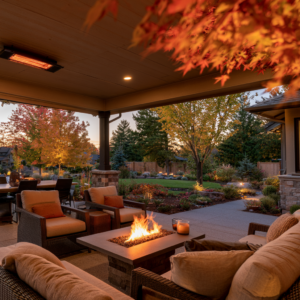
Outdoor Heaters 101: A Beginner’s Guide to Choosing the Right Heating Solution for Your Outdoor Space
This beginner’s guide breaks down the most common outdoor heating options, including propane, electric infrared, and natural gas heaters. Learn how each type works, where it performs best, and what to consider when planning for your patio, deck, or outdoor living space.