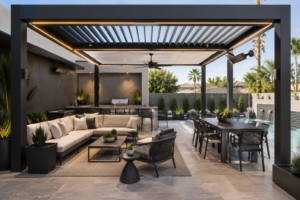
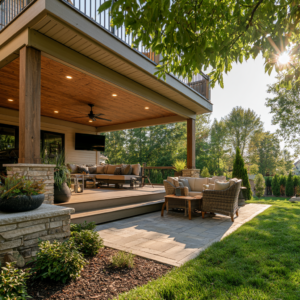
A gazebo or pergola gives your backyard a place to gather, but the structure alone may not provide all the privacy or shade you want. Afternoon sunlight can reach beneath the roofline, neighboring windows can overlook your seating area, and an open-sided space can feel exposed.
Outdoor curtains offer a flexible way to address those concerns while adding softness and style. You can close them when you want more coverage and open them when you want to enjoy the view.
The best results begin with a plan. Choose curtain placement based on sunlight, sightlines, and everyday movement before selecting fabric or ordering panels.
Start With What You Want the Curtains to Do
Gazebo curtains and pergola curtains can serve several purposes, but your main goal should guide the design.
Are you trying to shade a dining table during dinner? Add privacy around a lounge area? Frame the structure without closing it off?
Sunbrella’s outdoor curtain guide describes options ranging from lightweight sheers to heavier panels that provide greater privacy and intercept harsh sunlight. Those choices create different experiences, even when installed on the same structure.
A useful starting point is to identify one primary need and one secondary benefit. For example:
- Primary need: Block afternoon sunlight from the seating area.
- Secondary benefit: Add privacy from a neighboring yard.
That approach helps you avoid buying decorative panels that do not provide the coverage you need.
Position Curtains Where They Will Make a Difference
You do not have to cover every side of your gazebo or pergola.
Observe the space during the hours you use it most. Sit in your usual chair, stand beside the dining table, and check the view from the yard. Note where direct sunlight enters and which openings expose the space to neighbors.
Consider these layouts:
| Your main goal | Placement to consider |
| Afternoon shade | Panels across the opening receiving direct afternoon sun |
| Privacy from a neighboring property | Coverage along the shared sightline |
| A framed, decorative appearance | Panels gathered beside selected posts |
| Flexible coverage around a seating area | Separately operated panels across multiple openings |
These are planning examples rather than fixed rules. Your home’s orientation, surrounding landscaping, and furniture layout determine what works.
Side curtains also do not replace overhead shade. If sunlight comes through an open pergola roof, evaluate a compatible canopy or other roof-shading option separately. Sunbrella’s pergola shading guidance identifies fabric canopies and covers as options for adding overhead coverage.
Measure Each Opening Before Ordering
Measure every section individually rather than assuming opposite sides are identical. Posts, braces, and mounting locations can affect the usable space.
Record:
- The width the curtains need to cover.
- The planned rod or track location.
- The finished curtain drop.
- Space for panels to gather when open.
- Clearance above the deck, patio, or other finished surface.
For a gathered curtain arrangement, the combined panel width usually needs to exceed the opening width. Patio Lane recommends approximately 1.5 to 2 times the rod or coverage width for its custom curtains, depending on the desired fullness.
For example, an 8-foot opening could require 12 to 16 feet of combined fabric width using that guidance. Confirm the recommendation for your chosen curtain style; track systems and different heading styles can have their own requirements.
For length, account for how grommets, rings, tabs, or carriers position the fabric. Follow the seller’s measuring instructions rather than treating the mounting height as the finished panel length.
As a practical outdoor design choice, leave the hems clear of the surface instead of letting them puddle where people walk or water collects.
Choose Fabric for Privacy and Light
Fabric appearance matters, but so does how it performs when closed.
Sheer curtains
Sheers provide a light, airy appearance and soften incoming light. They suit spaces where decoration and an open feeling matter more than visual screening.
For example, Sunbrella describes its Lina sheer outdoor drapery as gently diffusing natural light. That effect should not be confused with complete privacy.
More opaque panels
Denser panels are a better starting point when privacy is the priority. However, check a sample rather than relying on color or fabric weight alone.
Evaluate the sample in daylight and with your outdoor lights on after dark. Also consider gaps between panels and around posts: opaque fabric cannot conceal a sightline that bypasses the curtain.
Outdoor performance
Choose fabric specifically approved for outdoor use, and compare its published resistance to fading, moisture, and mildew. These features vary by product.
Weather-resistant fabric still needs maintenance, and a water-resistant curtain does not turn an open gazebo or pergola into a watertight room.
Match the Hardware to the Structure
Outdoor curtains need suitable rods or tracks, brackets, and fasteners. Confirm that the hardware supports the panel weight and is intended for the exposure conditions.
A rod can provide a familiar decorative appearance. A track can offer a different way to move panels across an opening. In either case, check support spacing and how brackets affect curtain travel.
For a manufactured gazebo or pergola, consult the structure’s instructions before drilling or adding accessories. Thin metal sections, decorative trim, and hollow components should not be assumed to provide suitable attachment points.
If you are uncertain about mounting, have an installer assess the structure before purchasing the system.
Plan for Wind and Everyday Access
Curtains move in the breeze, so include a way to manage them when open.
Tiebacks can gather panels beside posts. Some curtain systems also offer compatible weights or anchoring accessories. OutdoorCurtains.com’s buying guide discusses accessories intended to help stabilize panels in windy conditions.
These features do not make ordinary curtains storm-proof. DFOhome notes that strong wind can damage fabric when it repeatedly strikes sharp objects. Follow the product’s instructions for securing or removing panels during severe weather.
Before finalizing the layout, check that open and closed curtains leave comfortable access to chairs, gates, doors, and walkways. Keep gathered panels out of the main entrance.
Give the Space a Cohesive Look
Once placement and coverage are settled, choose colors and textures that connect with your furniture and structure.
Neutral panels can provide a quiet backdrop. A contrasting color can make the curtains a more prominent feature. Matching the curtain fabric to an existing canopy or coordinating it with cushions can help the space feel intentional.
For a small pergola, try covering only the side that needs privacy and gathering decorative panels at the remaining corners. For a larger gazebo, separately operated sections let you adjust coverage without closing every opening.
The goal is a space that feels inviting and remains easy to use. Thoughtful placement, accurate measurements, and appropriate fabric help gazebo and pergola curtains become a useful part of your outdoor living area.
Sources