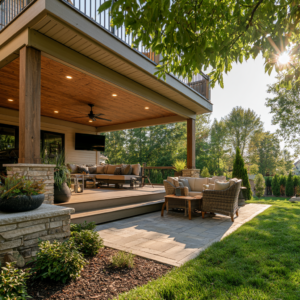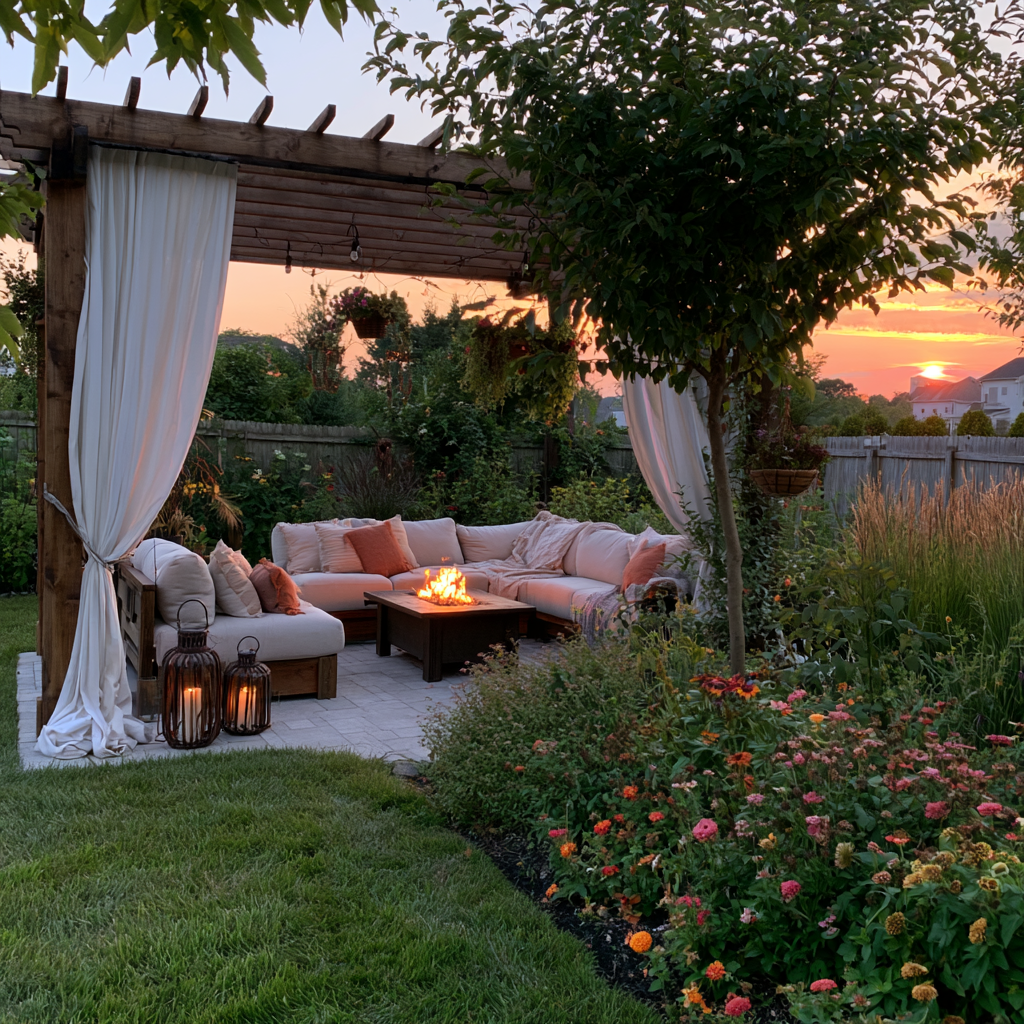
A covered patio can shelter your furniture and provide welcome shade, but it does not necessarily stay comfortable when temperatures drop. Adding a heater can make outdoor meals, morning coffee, and evening conversations more enjoyable during cooler weather.
Choosing a heater for a covered patio requires more than comparing heat output. Ceiling height, surrounding materials, ventilation, mounting options, and available power or fuel all affect which products fit your space.
Start by confirming that a heater is approved for your patio’s layout and exposure conditions. Then compare its coverage, installation requirements, controls, and everyday convenience.
1. Evaluate How Enclosed Your Patio Is
“Covered” describes the roof, but it does not explain how air moves through the space.
A roof supported by posts creates different conditions from a porch surrounded by walls, windows, or curtains. Before shopping, note:
- How many sides are permanently open.
- Whether screens, glass, or curtains enclose the space.
- Whether openings can be closed during use.
- The ceiling height and roof materials.
- Where rain and wind reach the proposed heater location.
This matters especially for propane and natural gas heaters. Fuel-burning equipment can produce carbon monoxide, which can accumulate when ventilation is inadequate.
Do not assume a screened porch or an opening left slightly ajar meets a gas heater’s requirements. Check the exact installation manual and have a qualified installer assess the space.
2. Compare Electric, Propane, and Natural Gas
Each energy source brings different installation and operating considerations.
| Heater type | Why homeowners consider it | What to verify |
| Electric infrared | Targeted warmth, no fuel cylinder, and several mounting options | Voltage, circuit capacity, outdoor approval, and clearances |
| Propane | Fuel-cylinder supply and freestanding options | Permitted location, ventilation, cylinder placement, and overhead clearance |
| Natural gas | Permanent fuel supply without cylinder changes | Gas-line capacity, professional installation, ventilation, and clearances |
For many covered seating areas, an outdoor-rated electric infrared heater is a useful starting point because it avoids on-site combustion. That does not make it suitable for every location: electric models still require appropriate mounting, weather protection, and separation from surrounding materials.
Bromic’s residential heating guidance similarly identifies electric heaters as an option for covered spaces, while emphasizing the role of layout and installation conditions.
Gas may fit an adequately open covered area when the selected model permits that installation. The product manual, rather than the energy source alone, determines suitability.
3. Check Clearances Before Choosing a Model
A heater that fits beneath the roof may still lack the required clearance.
Measure the proposed location and identify nearby beams, siding, furniture, curtains, fans, lights, and other objects. Pay attention to materials that can move toward the heater, including loose fabric.
Bromic explains that clearance requirements vary with the heater, energy source, and output. There is no universal ceiling or side-clearance measurement that applies to every patio heater.
Use the installation diagram for the exact model and mounting arrangement. Check both the minimum mounting height and the required distances above, beside, behind, and in front of the heater.
If the space does not meet those requirements, select another approved configuration or heater. Do not assume an improvised shield makes an unsuitable installation acceptable.
4. Size the Heating Plan Around Your Seating
Begin with the area people occupy rather than the patio’s total square footage.
A covered patio may contain a dining table, outdoor kitchen, and lounge area, but those zones may not all need heat at the same time. Mapping them separately can help you avoid buying one oversized unit that delivers uneven comfort.
For each zone, record:
- Its approximate dimensions.
- The number and position of seats.
- Possible mounting locations.
- Distance from the heater to occupants.
- Exposure to wind.
Compare those details with the manufacturer’s coverage chart and mounting recommendations.
Infratech’s W-Series instructions explain that protected locations can perform differently from areas exposed to extreme cold or wind. Advertised coverage should therefore be treated as a planning guide, not a promise of equal warmth everywhere.
For a long patio, two separately controlled heaters may provide a more practical layout than one unit aimed across the entire space. Confirm the arrangement with the manufacturer or installer.
5. Choose a Mounting Style That Fits
The mounting method affects coverage, available space, and appearance.
Wall-mounted heaters
Wall mounting keeps the floor clear and can direct warmth toward a seating area. Check that the wall provides suitable support and that the approved mounting angle reaches the intended zone.
Ceiling-mounted heaters
An overhead installation can suit a dining or lounge area when the roof structure, height, and clearances allow it. Coordinate placement with fans and lighting before installation.
Recessed heaters
Recessed installation creates an integrated appearance, but it requires a compatible heater, approved recess system, and suitable ceiling construction.
Freestanding heaters
A freestanding model offers layout flexibility but occupies floor space. Include its base, required separation from furniture, and access routes in your plan.
Infratech’s mounting guidance shows how installation choices vary by heater series. Never assume a surface-mounted product can also be recessed or installed in a different orientation.
6. Confirm Power or Fuel Availability
Check installation feasibility before settling on a heater.
For electric models, have a qualified electrician verify voltage, circuit capacity, wiring, outdoor protection, and controller compatibility. Some heaters require permanent hardwiring. For example, Infratech’s SL-Series manual requires installation by a licensed electrician.
For natural gas, have a qualified gas professional assess the supply and installation. A nearby gas connection does not establish that it can support another appliance.
For propane, include cylinder handling and storage in the buying decision, following the heater instructions and applicable local requirements.
7. Compare the Full Cost and Daily Experience
The purchase price is only part of the budget. Ask for an installed estimate that includes mounting accessories, wiring or gas work, controls, and any required preparation.
Then consider how you will use the system:
- Can you operate individual heating zones?
- Are adjustable output settings available?
- Are controls conveniently located?
- What cleaning and inspection does the manufacturer require?
- Where will a portable unit go when it is not needed?
For an electric heater, estimate operating cost using:
Kilowatts × operating hours × electricity rate per kilowatt-hour
Use your own utility rate and the heater’s actual power settings. For gas models, compare fuel consumption and local fuel costs rather than assuming one energy source is always cheaper.
Make the Patio Layout Your Starting Point
A suitable covered-patio heater must fit the space physically, deliver warmth where people sit, and meet the manufacturer’s installation requirements.
Measure first, identify the enclosure conditions, and confirm power or fuel access. Then compare models and installed costs. Those steps make it easier to choose a heater that helps you enjoy your patio or porch through more of the year.
Sources