-
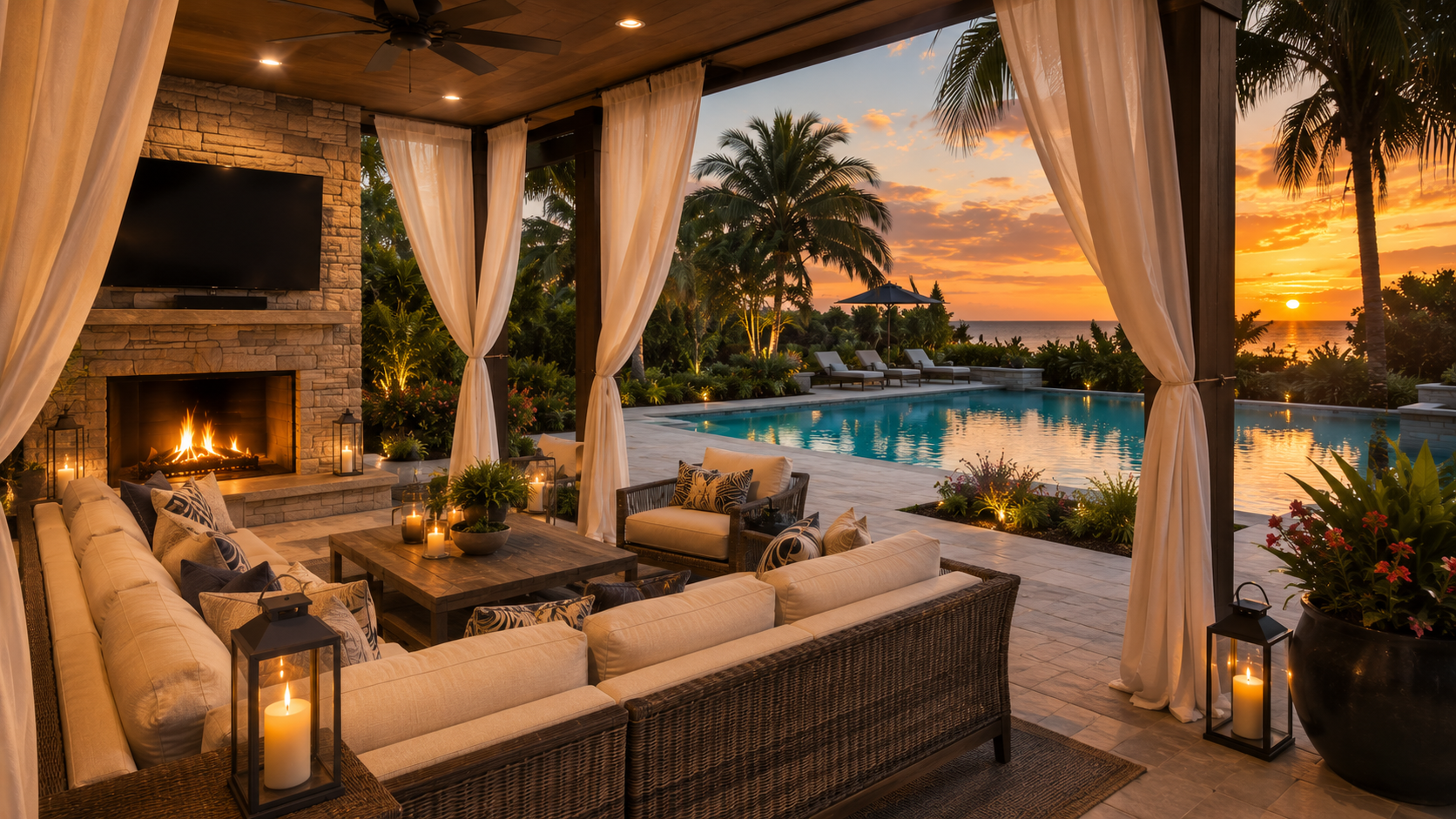
Outdoor curtains can make a patio, pergola, porch, or covered deck feel much more like a finished outdoor room. They can add privacy, reduce harsh sunlight, create separation between spaces, and introduce a softer design element to an area dominated by wood, stone, and metal.
Getting the best result, however, requires planning. Before ordering fabric, think about where the curtains will go, what they’re supposed to accomplish, how they’ll interact with wind, and how you’ll use the space when they’re open and closed.
Here’s how to plan an outdoor curtain installation that looks intentional and functions well.
- Decide What Problem You’re Trying to Solve
Start with the reason you want curtains.
For some homeowners, privacy is the priority. For others, it’s blocking intense afternoon sunlight. You may simply want to define a covered patio and make it feel more like an outdoor living room.
Sunbrella recommends considering the existing structure and identifying where sunlight needs to be blocked before deciding where curtains should hang.
Walk through your outdoor space at different times of day. Pay attention to where the sun comes from, where neighboring homes have sightlines into your patio, and which sides you’d prefer to keep open.
You may discover that you don’t need curtains on all four sides.
- Plan Around Privacy Without Blocking the Backyard
Outdoor curtains work best when they provide privacy where it’s needed without unnecessarily closing off the space.
Imagine a suburban patio where the neighboring house is clearly visible on the left side, but the back of the patio overlooks a landscaped yard.
Instead of enclosing everything, consider heavier privacy curtains along the property-facing side while leaving the backyard-facing opening unobstructed.
This allows you to create a more intimate space without losing the open-air feeling that makes outdoor living enjoyable.
Curtains can also remain tied back most of the time and only be closed when privacy or additional shade is wanted.
- Measure the Space Before Selecting Curtains
Measurements should come before shopping.
Measure each opening individually, especially on pergolas and other structures where dimensions may vary slightly.
For width, don’t simply purchase enough fabric to stretch from one post to another. Curtains generally need additional width to create natural folds. OutdoorCurtains.com recommends approximately 1.5 times the width of the opening as a starting point for a fuller appearance.
For height, measure from the planned curtain rod to the finished floor or deck surface.
Sunbrella’s measuring guidance notes that curtains can stop slightly above the floor for a clean appearance. For outdoor spaces, keeping fabric slightly off the surface can also help prevent the bottom from dragging through dirt or standing moisture.
- Plan for Wind
Wind is one of the biggest differences between indoor and outdoor curtains.
A lightweight panel may look beautiful on a calm afternoon but become frustrating when wind begins pushing it around the patio.
Before installation, determine how exposed the area is.
Options for controlling movement include:
- Weighted hems or anchor weights
- Bottom stabilizing grommets
- Tiebacks
- Secure curtain rods and brackets
Some purpose-built outdoor curtain systems offer stabilizing grommets and anchor weights specifically for windy conditions.
However, outdoor curtains shouldn’t be treated like storm protection. Some manufacturers specifically caution that curtain panels are intended for shade and aesthetics rather than heavy-duty wind or severe-weather protection.
For highly exposed patios, consider whether curtains are practical before committing to them.
- Think About Where Curtains Go When They’re Open
This detail is easy to overlook.
If you install four large curtain panels around a pergola, where will all that fabric sit when the curtains are open?
Ideally, curtains should stack neatly near posts or structural columns rather than hanging in the middle of an opening.
Think about traffic flow as well.
Avoid creating bundles of fabric next to:
- Doors
- Stairs
- Grills
- Walkways
- Outdoor kitchens
- Television viewing areas
Tiebacks can keep curtains organized and prevent them from becoming an obstacle during normal use.
- Coordinate Curtains With Fans, Heaters and Lighting
For a complete outdoor room, plan curtains alongside the other features you may eventually install.
Outdoor curtains often share space with ceiling fans, patio heaters, speakers, televisions, lighting, and cooking equipment.
Heaters deserve particular attention. Curtains and other combustible materials shouldn’t be allowed to blow into a heater’s required clearance area. NFPA guidance for outdoor heaters emphasizes maintaining appropriate separation from combustible materials and following manufacturer-required clearances.
If you’re building the patio from scratch, create a simple plan showing every major feature before installing anything.
That might include:
Curtain tracks → Fans → Lighting → Heaters → Speakers → TV
Planning everything together helps prevent conflicts later.
- Make Sure the Structure Can Support the Hardware
Curtains may look lightweight, but a wide span of outdoor fabric can place significant stress on rods and brackets—particularly when wind catches the panels.
Sunbrella recommends installing mounting hardware directly into wood beams when possible to provide solid support for the curtain rod.
Long openings may require additional brackets or specialized curtain-track systems.
Also choose hardware intended for outdoor use. Your curtain fabric may be designed for years of exterior exposure, but that doesn’t help much if the mounting hardware begins corroding after one season.
- Choose Your Opening Style
Think about how you want the curtains to operate.
A center-opening configuration works well for large openings because panels can stack on both sides.
A single-direction opening can work well for smaller sections where all the fabric can stack against one post.
For a large pergola, individual curtain sections between each structural post can provide greater flexibility. You might close only the west-facing section during late-afternoon sun while leaving everything else open.
That’s one of the biggest advantages of curtains: the outdoor space can change throughout the day.
- Think About the View From Inside the House
Outdoor curtains don’t only affect how your patio looks while you’re sitting outside.
They can also change the view from inside your home.
Before choosing placement and color, stand inside and look through your primary windows and sliding doors.
Will closed curtains completely block an important backyard view? Would lighter-colored panels maintain a brighter appearance? Could curtains frame the patio rather than dominate it?
Sunbrella specifically suggests using curtains around sliding doors to help visually connect indoor and outdoor living areas.
Treat the patio as an extension of the home rather than an entirely separate design.
Plan Before You Purchase
The most successful outdoor curtain installations aren’t simply about choosing attractive fabric.
Start by identifying where you need privacy, shade, and separation. Measure each opening carefully, account for fabric fullness, determine how you’ll control the curtains in wind, and make sure the hardware has appropriate structural support.
Most importantly, consider how curtains interact with the rest of your outdoor living space.
When your curtains, lighting, fans, heating, sound, furniture, and architecture are planned together, the result feels less like a patio with curtains added to it—and more like a thoughtfully designed outdoor room.
Sources
Outdoor Heaters 101: A Beginner’s Guide to Choosing the Right Heating Solution for Your Outdoor Space
This beginner’s guide breaks down the most common outdoor heating options, including propane, electric infrared, and natural gas heaters. Learn how each type works, where it performs best, and what to consider when planning for your patio, deck, or outdoor living space.