-
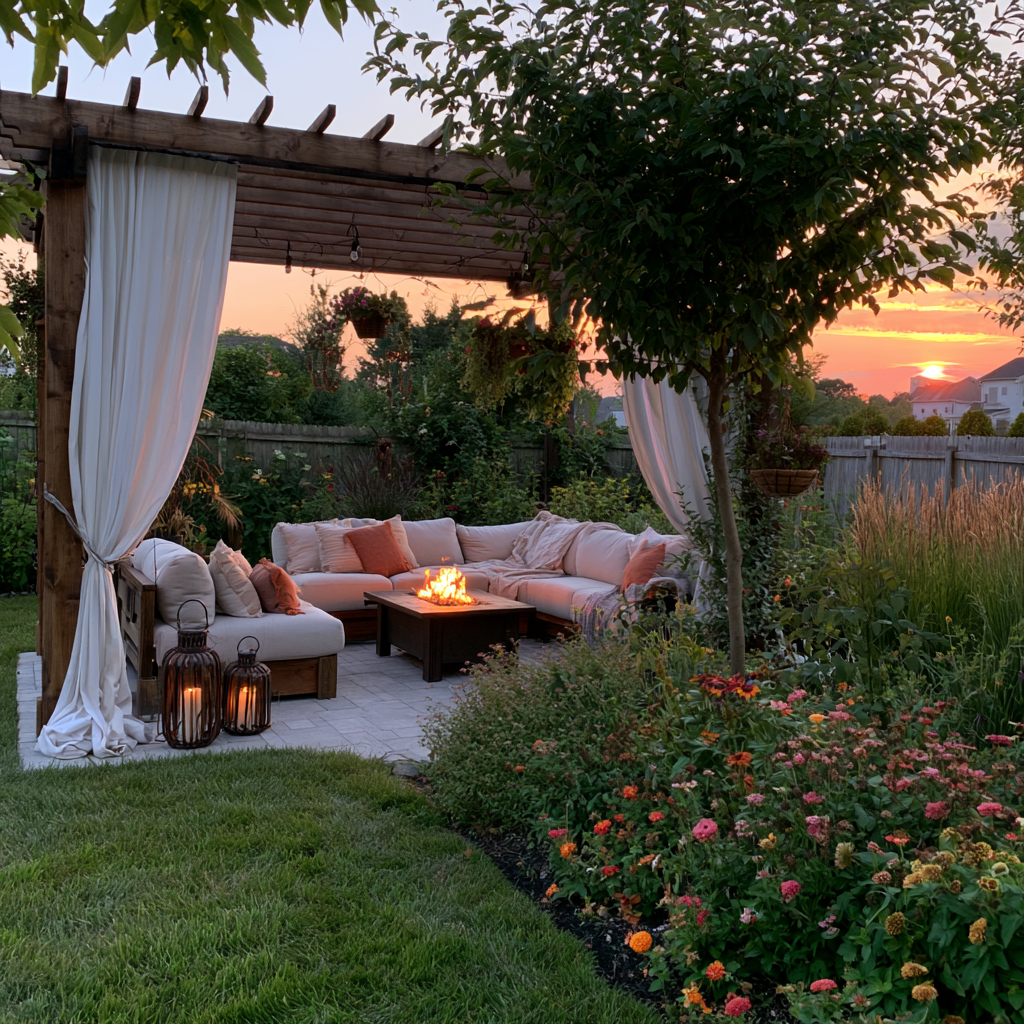
Outdoor curtains are one of the simplest ways to make a patio, porch, pergola, or covered deck feel more like an outdoor room. They can provide privacy, soften harsh sunlight, add color and texture, and create separation between different areas of a backyard.
But outdoor curtains need to do more than look good. They’re exposed to sunlight, moisture, wind, pollen, dirt, and changing temperatures, so fabric, coverage, mounting style, and weather resistance all matter when deciding what to buy.
Here’s what homeowners should consider when choosing outdoor curtains.
Start With What You Want Your Curtains to Do
Before comparing fabrics or colors, determine your primary reason for adding curtains.
Are you looking for privacy from neighboring homes? Do you need afternoon shade? Are you primarily interested in creating a softer, more finished look around a pergola? Or do you want curtains that can accomplish a little of everything?
Outdoor curtains can be used to:
- Add privacy around patios and decks
- Reduce direct sunlight and glare
- Define an outdoor living room
- Add softness to pergolas and pavilions
- Separate dining and lounge areas
- Create a cabana-inspired appearance
Sunbrella recommends considering both the structure you’re working with and the direction from which you need to block sunlight when determining curtain placement.
Knowing your priority will make the rest of the buying process much easier.
Choose the Right Outdoor Fabric
The biggest difference between indoor and outdoor curtains is the fabric.
While indoor curtains primarily need to look good and hang properly, outdoor fabrics have to withstand environmental exposure. Look for fabrics specifically designed for exterior applications.
Solution-Dyed Acrylic
Solution-dyed acrylic is one of the premium options for outdoor curtains.
Rather than applying color only to the exterior of the finished fiber, solution-dyed fabrics incorporate pigment into the fiber itself. Sunbrella, for example, uses UV-stabilized pigments throughout its fibers to improve resistance to fading from outdoor exposure.
Quality solution-dyed acrylic outdoor fabrics can also offer resistance to water, stains, mold, and mildew.
This makes them particularly attractive for homeowners looking for curtains that will remain outside for much of the season.
Outdoor Polyester
Polyester curtains can provide a more budget-friendly alternative.
Performance varies considerably by product. Some polyester outdoor curtains offer useful UV and water resistance but may not provide the same long-term colorfastness as higher-end solution-dyed fabrics.
For a lightly used covered porch or a homeowner who likes changing colors every few seasons, that tradeoff may be perfectly reasonable.
Don’t shop by material name alone. Compare the manufacturer’s specific claims for UV resistance, water resistance, mildew resistance, cleaning, and exterior use.
Water-Resistant Doesn’t Necessarily Mean Waterproof
This distinction is important when shopping for outdoor curtains.
Many outdoor performance fabrics are designed to repel water and dry relatively quickly, but that doesn’t automatically make the curtain a waterproof wall.
Curtains are primarily a shade, privacy, and design feature, not a substitute for a roof or drainage system.
If you’re trying to create a genuinely dry covered outdoor room, address overhead rain management separately. Then use curtains around the perimeter to add privacy, sun control, and style.
For patios frequently exposed to rain, prioritize quick-drying, water-resistant fabrics and make sure the curtains have opportunities to dry completely.
Think About How Much Privacy You Want
Not every outdoor curtain needs to be completely opaque.
For a patio facing a neighboring property, heavier curtains can create substantial visual separation.
If your main goal is ambiance, a lighter or sheer outdoor curtain can create movement and softness while maintaining views and natural light. Some outdoor sheers are specifically designed to gently filter sunlight rather than completely block it.
You can even combine the two.
For example, use heavier panels along the side facing neighboring homes while using lighter curtains around the rest of a pergola.
This provides privacy where you need it without making the entire outdoor room feel enclosed.
Measure Before You Buy
One of the easiest outdoor-curtain mistakes is purchasing panels before measuring the structure.
Measure both the height and width of the opening you want to cover.
Then consider how full you want the curtains to appear when closed. A curtain that barely spans the opening may look flat and stretched. Additional fabric creates folds and gives the installation a more finished appearance.
Also determine where the rod or track will mount. Sunbrella recommends mounting hardware directly into wood beams where possible for strong curtain-rod support.
For unusually large patios or pergolas, custom-sized panels may create a cleaner result than trying to combine numerous standard curtains.
Choose the Right Hanging Style
Outdoor curtains come with several attachment styles, including:
Grommets — Metal rings integrated into the curtain provide a clean, modern appearance and slide easily along a rod.
Tab tops — Fabric loops create a more relaxed, casual look.
Rod pockets — The curtain rod passes through a fabric sleeve, producing a clean appearance but potentially making frequent opening and closing less convenient.
Curtain rings or clips — These can make panels easier to move and provide a more traditional drapery appearance.
Some outdoor curtains offer multiple hanging configurations in the same panel, giving homeowners greater flexibility.
If you expect to open and close your curtains frequently, prioritize a system that moves smoothly.
Don’t Forget About Wind
Wind can turn a beautiful outdoor curtain into a frustrating one.
In exposed areas, look for options with weighted hems, weighted corners, tiebacks, or compatible bottom restraints. Some purpose-built outdoor curtains incorporate weighted corners specifically to help the fabric hang more evenly.
During significant wind or severe weather, follow the curtain and hardware manufacturer’s recommendations, which may include securing or removing the panels.
Also make sure your mounting hardware is appropriate for both the weight of the fabric and the outdoor environment.
Match the Curtain to Your Type of Home
Different outdoor spaces benefit from different curtain styles.
Traditional Suburban Patio
Neutral outdoor curtains in beige, gray, white, or another color that complements the home’s exterior can add privacy without overwhelming the space.
Pair them with comfortable seating, warm outdoor lighting, and an outdoor rug for a simple outdoor-room effect.
Modern Home
Look for clean lines, minimal hardware, and solid-color curtains.
Black, charcoal, cream, and muted earth tones can work especially well alongside modern pergolas and contemporary architecture.
Coastal Home
Prioritize materials built for moisture, sunlight, and humid environments. Light colors and airy fabrics can create a relaxed coastal look, but make sure hardware and curtain components are also appropriate for the environment.
Covered Deck or Under-Deck Space
Curtains can help turn these protected spaces into defined outdoor rooms.
Use them along the perimeter for privacy while leaving major openings unobstructed when you want airflow and backyard views.
Pergola
Curtains work particularly well on pergolas because the structure naturally provides mounting points.
Install panels around selected sides so they can remain open most of the time and close when additional shade or privacy is needed.
Consider Maintenance Before Purchasing
Outdoor curtains will get dirty.
Look for products with clear manufacturer cleaning instructions. Depending on the particular fabric and curtain construction, cleaning may range from spot cleaning with soap and water to machine washing. You should follow the instructions for the finished curtain rather than assuming all curtains made from a particular fabric can be cleaned the same way.
Also consider whether panels are easy to remove from the rod. If taking them down requires dismantling the entire installation, seasonal cleaning and storage become much less convenient.
The Outleven Outdoor Curtain Buying Checklist
Before purchasing, ask yourself:
- Is my main goal privacy, shade, style, or a combination?
- Is the fabric specifically intended for outdoor use?
- How resistant is it to UV exposure and fading?
- Is it water-resistant and quick-drying?
- Does it resist mold and mildew?
- Do I want opaque or sheer curtains?
- Have I measured the opening correctly?
- How will the curtains attach to the rod?
- How will I manage the curtains in windy conditions?
- Can the curtains be easily removed and cleaned?
- Does the color complement my home’s exterior and outdoor furniture?
Choosing the Right Outdoor Curtains
The best outdoor curtains aren’t necessarily the heaviest or most expensive option.
They’re the curtains that fit your environment and the way you use your space.
A covered suburban porch may only need lightweight curtains for occasional privacy. A sunny pergola might benefit from UV-resistant performance fabric. A coastal patio may prioritize moisture resistance and durability, while a high-end outdoor living room might call for custom solution-dyed acrylic panels that coordinate with the furniture and architecture.
Start with function, then choose your fabric, size, mounting system, and style.
Done well, outdoor curtains don’t just provide privacy. They help define the boundaries of an outdoor room, making a patio or deck feel more comfortable, intentional, and connected to the rest of the home.
Sources
Outdoor Heaters 101: A Beginner’s Guide to Choosing the Right Heating Solution for Your Outdoor Space
This beginner’s guide breaks down the most common outdoor heating options, including propane, electric infrared, and natural gas heaters. Learn how each type works, where it performs best, and what to consider when planning for your patio, deck, or outdoor living space.