-
-
The difference between an average backyard and one that feels like a luxury outdoor retreat often isn’t the furniture, landscaping, or even the size of the space—it’s the lighting.
If you’ve ever walked into a professionally designed outdoor living space, you’ve probably noticed that nothing feels overly bright, yet everything is easy to see. The patio feels warm and inviting, pathways naturally guide you through the yard, trees seem to glow from within, and the entire space has a comfortable ambiance that encourages you to stay outside long after sunset.
That effect doesn’t happen by accident.
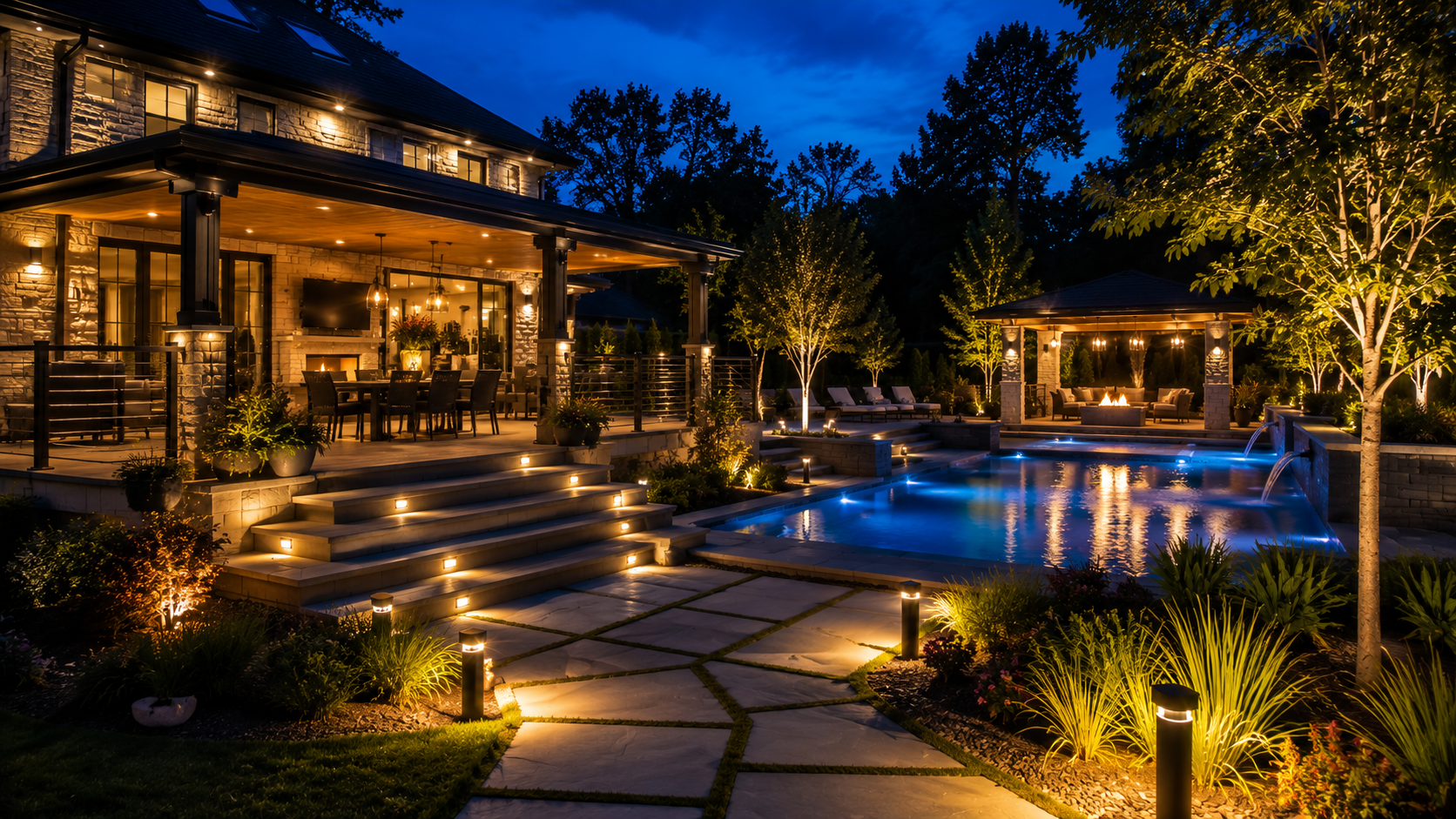
Landscape designers use a technique called layered lighting to create outdoor spaces that are both functional and beautiful. Rather than relying on one bright floodlight or a single porch light, layered lighting combines several different types of fixtures, each serving a specific purpose.
Whether you’re designing a new backyard or upgrading your existing outdoor space, understanding how to layer light is one of the best ways to create an outdoor oasis.
What Is Layered Lighting?
Layered lighting is the practice of combining ambient lighting, task lighting, and accent lighting to create a balanced outdoor environment.
Each layer has its own purpose, but together they create depth, warmth, and visual interest that can’t be achieved with a single light source. Interior designers have long relied on this approach inside the home, and the same principles work just as well outdoors.
Instead of thinking about lighting as simply helping you see, think of it as creating an experience.
Layer One: Ambient Lighting
Ambient lighting provides the foundation of your outdoor lighting plan.
Its job is to create a comfortable level of general illumination without producing harsh glare or overly bright spaces.
Common examples include:
- Recessed soffit lighting
- Pendant lights
- Wall sconces
- String lights
- Post cap lights
- Ceiling fans with integrated lighting
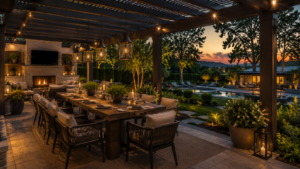
Imagine sitting beneath a covered patio after dinner. Ambient lighting provides the soft glow that makes the entire space feel comfortable without becoming the center of attention.
For most outdoor living areas, warm white lighting between 2700K and 3000K creates the most inviting atmosphere.
Layer Two: Task Lighting
Task lighting focuses on areas where visibility matters most.
Unlike ambient lighting, task lighting is designed to help you perform specific activities safely and comfortably.
Examples include:
- Stair lights
- Outdoor kitchen lighting
- Grill lights
- Walkway lighting
- Entry lighting
- Garage lighting
Think about walking down deck stairs after dark.
Without proper stair lighting, every step becomes uncertain. Add recessed stair lights or handrail lighting, and suddenly the space feels both safer and more welcoming.
Task lighting doesn’t need to be bright—it simply needs to provide enough illumination where it’s needed most.
Layer Three: Accent Lighting
Accent lighting is where your backyard begins to feel professionally designed.
Rather than lighting the entire yard equally, accent lighting draws attention to specific features.
Popular examples include:
- Uplighting mature trees
- Spotlights on stone walls
- Garden lighting
- Water feature lighting
- Landscape spotlights
- Architectural lighting
Accent lighting creates contrast.
Our eyes naturally gravitate toward illuminated focal points, so highlighting a beautiful tree, fountain, or pergola gives the entire yard more character and depth.
Professional designers often say that if every feature is highlighted, then nothing stands out.
Choose only a handful of elements you want guests to notice first.
Light at Different Heights
One of the biggest mistakes homeowners make is placing every fixture at ground level.
Professional outdoor lighting uses different heights to create visual balance.
For example:
Ground Level
- Path lights
- Garden lights
- Uplights
Eye Level
- Wall sconces
- Lanterns
- Post lights
Overhead
- String lights
- Pendant lighting
- Recessed soffit lights
- Pergola lighting
Using multiple heights prevents the space from feeling flat while adding depth and dimension throughout the landscape.
Connecting Your Outdoor Spaces
Great lighting also helps connect separate areas of your backyard.
For example:
A softly lit pathway leads guests from the back door to the patio.
Deck stair lights naturally guide them toward an under-deck living space.
Recessed soffit lights illuminate the seating area.
Landscape uplighting highlights nearby trees.
Finally, warm café lights define the outdoor dining space.
Each lighting layer gently guides movement from one area to the next, making the backyard feel larger and more cohesive.
Layering Light Around a Deck
Decks often become the centerpiece of outdoor living, making them an ideal place to apply layered lighting.
A complete lighting design might include:
Deck Rail Lighting
Subtle LED lights beneath the railing improve visibility while defining the deck’s perimeter.
Stair Lighting
Recessed lights increase safety and make stairs easier to navigate.
Soffit Lighting
If you’ve finished the space beneath an elevated deck, recessed lighting in the ceiling creates a comfortable outdoor room.
Landscape Lighting
Trees, shrubs, and surrounding planting beds help visually connect the deck to the rest of the backyard.
Together, these elements create one seamless outdoor living environment rather than several disconnected spaces.
Create Different Zones
One benefit of layered lighting is that it allows every area to have its own purpose.
For example:
Outdoor Living Room
Soft recessed lighting, wall sconces, and a ceiling fan create a relaxing atmosphere.
Outdoor Kitchen
Brighter task lighting ensures food preparation remains safe and convenient.
Fire Pit
Warm accent lighting around nearby landscaping provides atmosphere without competing with the fire itself.
Garden
Gentle uplighting highlights textures and seasonal color.
By treating each space as its own room, your backyard feels thoughtfully designed instead of uniformly illuminated.
Don’t Overlight Your Backyard
More light doesn’t necessarily create a better outdoor space.
In fact, one of the most common lighting mistakes is installing fixtures that are too bright.
Excessive lighting:
- Creates glare
- Eliminates visual depth
- Makes landscapes appear flat
- Reduces nighttime ambiance
- Can contribute to unnecessary light pollution
Instead, use multiple lower-output fixtures working together.
The result is softer, more comfortable, and far more attractive.
Smart Lighting Makes Layering Even Easier
Modern smart lighting systems allow homeowners to customize their outdoor lighting for different occasions.
Imagine creating scenes such as:
Everyday Evening
Soft path lights, deck lighting, and landscape accents.
Dinner Party
Outdoor dining lights brighten while surrounding landscape lighting dims slightly.
Movie Night
Only soffit lighting and pathway lighting remain on.
Holiday Gathering
Landscape lights, string lights, and decorative fixtures all operate together.
Timers, dimmers, smartphone controls, and voice assistants make adjusting your lighting easier than ever.
Bringing Everything Together
The most memorable outdoor spaces don’t rely on one spectacular fixture.
Instead, they combine several subtle layers that work together.
Imagine arriving home after sunset.
Warm pathway lights guide you through the landscape.
Mature trees glow softly from below.
Your deck railing is outlined with subtle LED lighting.
The stairs lead naturally toward a finished under-deck living room where recessed soffit lights cast a warm glow over comfortable furniture. String lights sparkle overhead while outdoor speakers play softly in the background.
None of the individual fixtures steal attention.
Instead, they work together to create an atmosphere that’s welcoming, relaxing, and unmistakably intentional.
Final Thoughts
Layered lighting is one of the simplest ways to transform an ordinary backyard into a true outdoor living experience. By combining ambient, task, and accent lighting at different heights and throughout different zones, you create depth, improve safety, and establish an inviting atmosphere that encourages family and friends to spend more time outdoors.
Whether you’re lighting a deck, patio, pergola, or an entire landscape, remember that great lighting isn’t about using more fixtures—it’s about using the right fixtures in the right places.
When thoughtfully designed, layered lighting doesn’t just illuminate your backyard. It helps create the outdoor oasis you’ve always imagined.
Sources
- Illuminating Engineering Society (IES). Lighting Fundamentals and Design Principles. https://www.ies.org
- Lutron. Layered Lighting Tips for Luxury Spaces. https://www.lutron.com/us/en/articles/layered-lighting-tips
- International Dark-Sky Association. Responsible Outdoor Lighting Practices. https://darksky.org
- American Lighting Association (ALA). Residential Outdoor Lighting Resources. https://americanlightingassoc.com
- U.S. Department of Energy. Energy Saver: LED Lighting. https://www.energy.gov/energysaver/led-lighting
- Homes & Gardens. How to Plan Outdoor Lighting Like a Designer.
-
Outdoor Heaters 101: A Beginner’s Guide to Choosing the Right Heating Solution for Your Outdoor Space
This beginner’s guide breaks down the most common outdoor heating options, including propane, electric infrared, and natural gas heaters. Learn how each type works, where it performs best, and what to consider when planning for your patio, deck, or outdoor living space.