
-
-
Cool evenings don’t have to signal the end of your time outdoors. With the right patio heater, you can continue enjoying your deck, patio, or outdoor living room well into the fall—and in many climates, throughout much of the winter.
As outdoor living spaces become more sophisticated, patio heaters have become one of the most popular additions for homeowners looking to extend the outdoor season. Whether you’re hosting a family dinner, watching football outside, or simply enjoying a quiet evening under the stars, adding heat can dramatically improve comfort.
If you’re shopping for a patio heater, you’ll quickly discover two primary options: propane and electric.
Both provide effective outdoor heat, but they differ in installation, operating costs, heat output, and overall design. Understanding these differences can help you choose the best solution for your backyard.
Propane Patio Heaters
Propane patio heaters are the freestanding heaters most homeowners recognize from restaurant patios and outdoor dining spaces.
These units burn liquid propane stored in a standard tank located inside the base of the heater. As the propane burns, heat radiates outward, warming nearby seating areas.
Because propane heaters don’t require electrical wiring, they offer excellent flexibility. They can easily be repositioned around your patio depending on where guests are gathering.
Advantages of Propane Heaters
One of the biggest benefits of propane is portability.
If you’re rearranging furniture for a party or creating multiple seating areas throughout the year, a freestanding propane heater can move with your space.
Propane heaters also produce a significant amount of heat. Many residential models generate between 35,000 and 50,000 BTUs, making them well suited for larger patios and open-air environments where heat dissipates quickly.
Another advantage is that propane heaters continue working during power outages, making them a dependable option regardless of electrical service.
Things to Consider
While propane heaters provide impressive warmth, they do require ongoing fuel replacement.
Depending on usage, homeowners should expect to refill or exchange propane tanks periodically throughout the heating season.
The units themselves also occupy valuable floor space, which can become a consideration on smaller patios or decks.
Because propane uses an open flame, proper clearance from combustible materials is essential. Always follow the manufacturer’s installation and operating instructions regarding placement, ventilation, and safe operation.
Electric Patio Heaters
Electric patio heaters have become increasingly popular as homeowners create more permanent outdoor living spaces.
Instead of burning fuel, electric heaters convert electricity into infrared heat that warms nearby people and objects rather than simply heating the surrounding air.
Electric models are available in several configurations, including wall-mounted, ceiling-mounted, freestanding, and recessed designs.
Many homeowners choose electric heaters because they integrate seamlessly into covered patios, pergolas, finished under-deck living spaces, and outdoor kitchens.
Advantages of Electric Heaters
One of the biggest advantages of electric heaters is convenience.
There’s no propane tank to refill, no fuel to store, and virtually no routine maintenance beyond occasional cleaning.
Electric infrared heaters also produce heat almost instantly after being turned on.
Because many models mount overhead or on walls, they preserve valuable floor space while maintaining a clean, uncluttered appearance.
Another benefit is precise control. Many electric systems include wall switches, remote controls, smart home integration, or programmable timers that allow homeowners to adjust heat levels with minimal effort.
Things to Consider
Electric heaters typically require access to a dedicated electrical circuit and may require professional installation depending on the model.
While operating costs vary based on local electricity rates, electric heaters generally provide more focused heat rather than warming a large open area.
For completely open patios exposed to wind, homeowners may need multiple electric heaters to achieve the same comfort level provided by a high-output propane unit.
Comparing the Two
Choosing between propane and electric often comes down to how you use your outdoor space.
Feature
Propane Heater
Electric Heater
Heat Output
Excellent for larger open areas
Best for targeted heating
Installation
Minimal
May require electrical installation
Portability
Easy to move
Usually permanent
Fuel Source
Propane tank
Household electricity
Maintenance
Tank replacement
Minimal maintenance
Appearance
Freestanding
Clean, integrated look
Best For
Open patios
Covered outdoor living spaces
Neither system is universally better—they simply serve different needs.
Outdoor Design Ideas
The type of patio heater you choose should complement the way your outdoor space is designed.
For Covered Patios
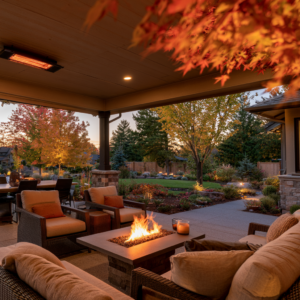
Electric infrared heaters are often the preferred choice because they can be mounted overhead or along structural beams.
This keeps the floor open for furniture while providing consistent warmth over seating and dining areas.
Pairing ceiling-mounted heaters with recessed lighting, ceiling fans, and outdoor speakers creates a clean, finished appearance that feels like an extension of your home’s interior.
For Open Patios
Freestanding propane heaters provide flexibility that works well for uncovered patios.
Place one or two heaters around conversation areas, outdoor dining tables, or fire pit seating to create comfortable gathering spaces without requiring permanent installation.
Because they can be repositioned, propane heaters adapt easily as furniture layouts change throughout the year.
For Finished Under-Deck Spaces
A finished under-deck living area often benefits from electric infrared heaters mounted beneath the finished ceiling.
Combined with outdoor lighting, ceiling fans, televisions, and comfortable furniture, these heaters help transform the area into a true four-season outdoor room.
Which Heater Is Right for You?
The best patio heater depends less on the heater itself and more on your outdoor lifestyle.
A propane heater is an excellent choice if you:
- Frequently rearrange your patio furniture
- Need high heat output
- Have a large, open entertaining area
- Want portable heating without electrical installation
An electric heater may be the better option if you:
- Have a covered patio or pergola
- Prefer a permanent, integrated appearance
- Want low-maintenance operation
- Like smart controls and instant heat
Some homeowners even combine both options—using electric heaters for everyday comfort beneath covered structures while keeping portable propane heaters available for larger outdoor gatherings.
Final Thoughts
Adding heat is one of the easiest ways to increase the amount of time you spend enjoying your outdoor living space.
Both propane and electric patio heaters can provide comfortable warmth while extending your outdoor season, but each excels in different situations.
Propane heaters offer flexibility, portability, and high heat output, making them ideal for larger open patios and entertaining spaces.
Electric heaters provide a sleek appearance, minimal maintenance, and efficient targeted heating that works especially well in covered outdoor environments.
Ultimately, the right choice comes down to your backyard layout, how you entertain, and the type of outdoor experience you want to create.
No matter which option you choose, pairing your heater with comfortable seating, layered lighting, outdoor audio, and thoughtful landscaping can help transform your patio into a space you’ll enjoy long after the temperatures begin to drop.
Sources
- U.S. Department of Energy. Energy Saver: Heating and Cooling. https://www.energy.gov/energysaver
- Consumer Product Safety Commission (CPSC). Outdoor Heating Safety Resources. https://www.cpsc.gov
- National Fire Protection Association (NFPA). Outdoor Heating Equipment Safety. https://www.nfpa.org
- American Society of Heating, Refrigerating and Air-Conditioning Engineers (ASHRAE). Thermal Comfort Fundamentals. https://www.ashrae.org
-
Outdoor Heaters 101: A Beginner’s Guide to Choosing the Right Heating Solution for Your Outdoor Space
This beginner’s guide breaks down the most common outdoor heating options, including propane, electric infrared, and natural gas heaters. Learn how each type works, where it performs best, and what to consider when planning for your patio, deck, or outdoor living space.